| Manufacturing Challenge | Business Impact | How RPA Solves It |
|---|---|---|
| Manual Data Entry | Slows production and increases human error | Bots extract and enter data automatically |
| Inventory Errors | Leads to stockouts or overstocking | Bots sync inventory data across systems in real time |
| Production Delays | Disrupts delivery schedules | Bots automate scheduling and status updates |
| Procurement Delays | Slows supplier onboarding and orders | Bots process purchase orders and approvals faster |
| Compliance Reporting | Increases regulatory risk | Bots generate accurate, timely compliance reports |


Loading...
RPA for Manufacturing: Automating Operations for Greater Efficiency and Productivity
Posted
August 17, 2026
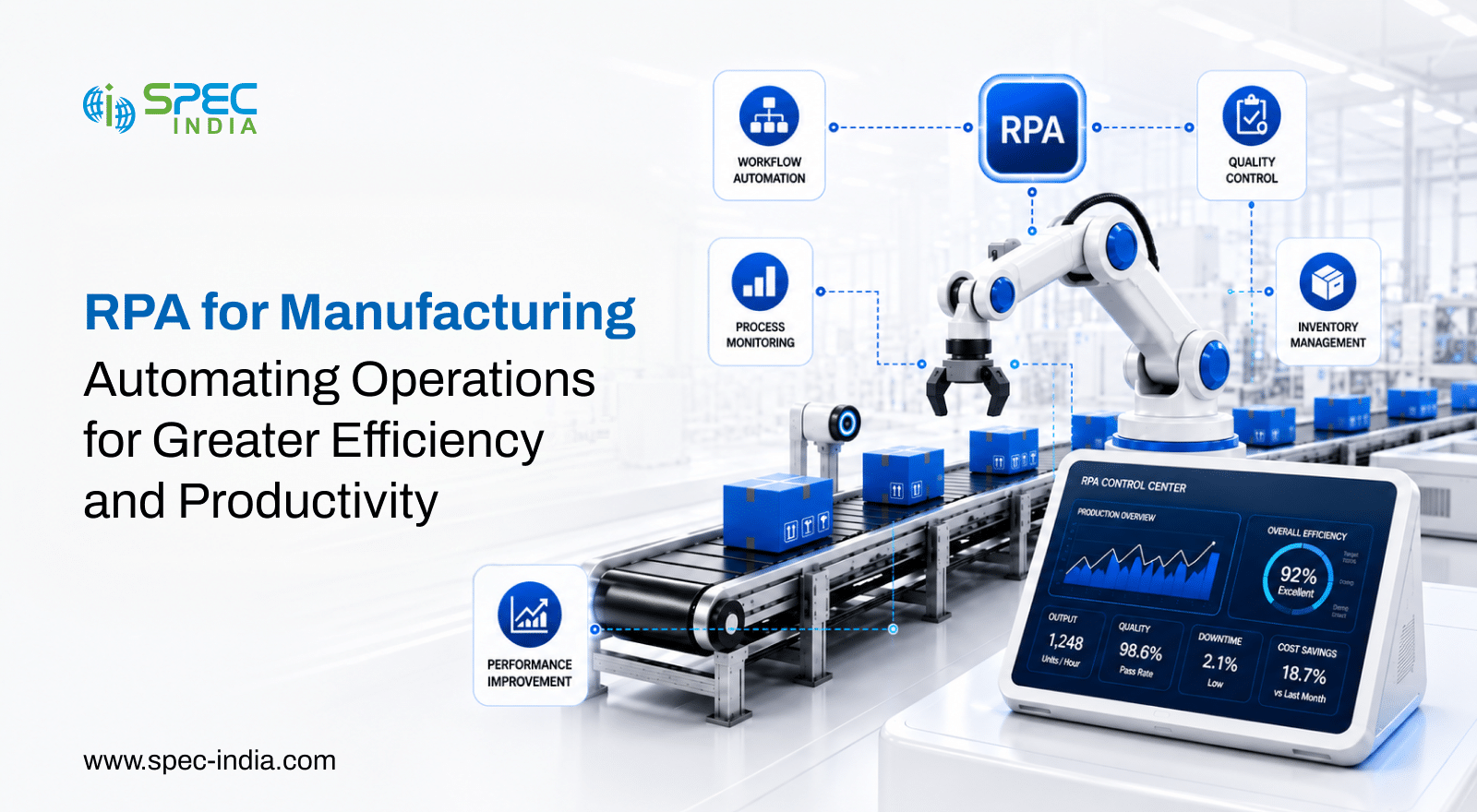
Manufacturers face constant pressure to improve output while keeping operating costs under control. Yet many processes still depend on people moving data between systems, checking documents, updating records, and following up on routine approvals. These tasks may seem small, but across plants and departments, they can consume significant time and create avoidable errors.
This is where RPA for manufacturing can make a difference. Software bots can handle repetitive, rule-based work while existing ERP, MES, and other business systems remain in place. According to Fortune Business Insights, the global RPA market was valued at USD 22.58 billion in 2025 and is projected to reach USD 110.06 billion by 2034, at a 19.10% CAGR.
For manufacturers, the opportunity goes beyond faster data entry. RPA can streamline connected workflows, improve data consistency, and give teams more time for decisions that require human judgment.
What is RPA in Manufacturing?
Robotic process automation (RPA) in manufacturing can be applied to repetitive tasks using software bots. These bots replicate human behavior in digital systems and operate alongside humans 24/7. RPA is a part of business process automation solutions. Unlike AI, RPA runs on a set of rules, without learning on the job.
What Does RPA Actually Do?
RPA is well suited for tasks that are:
- Rule-based and repetitive
- High volume and time sensitive
- Prone to manual errors
- Performed across multiple business systems
How RPA Fits into Manufacturing Operations
RPA in manufacturing works alongside existing manufacturing ERP, MES, and SCM platforms. It does not replace these systems. Instead, it extends their capabilities by automating routine activities. Bots log in to applications and complete tasks like human workers. They work faster and without fatigue or human error.
Large amounts of structured data are generated every day from manufacturing operations. Software bots handle this repetitive task, which is set to sync information in real time. Such measures give employees more time to be productive in their jobs in planning production and conducting quality checks.
Common Activities Bots Handle
Manufacturers often use bots to automate routine activities such as:
- Updating ERP records
- Synchronizing inventory data
- Processing purchase orders
- Tracking production status
- Validating business documents
Modern manufacturers rarely replace existing enterprise manufacturing automation systems simply to automate routine work. Instead, RPA works with the technology already in place. It exchanges information between applications without disrupting daily operations.
This minimizes implementation risks and the time required to deploy it. Normal systems remain in use, but with increased speed and consistency, plus greater visibility of what is happening in the business. They also extend the value of legacy systems rather than requiring an expensive replacement.
Bots also extract data from unstructured documents like emails and PDFs. This helps teams process invoice data and purchase orders faster. Many manufacturing companies turn to RPA development services to fit automation into their unique operational structure. This approach keeps legacy systems useful instead of forcing a costly replacement.
Physical Automation vs RPA: What’s the Difference?
Physical automation refers to robots carrying out tasks on the factory floor, such as welding, assembly operations, and material handling. RPA serves a different purpose. It automates digital back-office operations rather than physical movement. While both improve efficiency, they solve different operational challenges.
Physical Robots and Software Bots Work Together
Each type of automation supports a different part of the manufacturing process.
Physical robots typically:
- Assemble and package products
- Move materials across production lines
- Perform repetitive mechanical tasks
- Improve speed and consistency on the shop floor
Software bots typically:
- Process business transactions
- Update records across enterprise systems
- Generate reports and compliance documents
- Manage routine administrative workflows
Robots keep the production line moving, while software bots handle business processes behind the scenes. These include order management, compliance reporting, and inventory management. Together, they enable intelligent automation in the manufacturing industry and Industry 4.0 programs.
Software bots also act as an interface between systems that are not originally designed to communicate with each other. As manufacturing companies expand, many combine hyperautomation services with RPA consulting services to automate more complex, judgment-based workflows across the manufacturing domain.
Manufacturing Challenges That RPA Solves
There are daily challenges that any manufacturing organization must address. Many of these activities are still performed manually and are inherently slow, repetitive, and error-prone.
Common Challenges Across Manufacturing Operations
Manufacturers frequently struggle with:
- Manual data entry across multiple systems
- Production planning delays
- Inventory inaccuracies
- Slow procurement processes
- Quality assurance documentation
- Compliance reporting across locations
These problems increase costs, slow production, and reduce operational visibility. The study indicates that process automation is a priority across manufacturer investments, as 46% selected it as the top investment priority over the next two years in Deloitte’s 2025 Smart Manufacturing and Operations Survey. To resolve these long-standing problems, manufacturing process automation automates structured, rule-dependent processes that previously required a workforce.
Manufacturers can boost speed while maintaining high accuracy and establish more uniform workflows across the manufacturing sector.
High-Impact RPA for Manufacturing Use Cases
RPA manufacturing use cases extend across almost every function in a manufacturing business. Business software bots also save time and streamline processes from planning to procurement, financing, and quality management, among others. This leaves room for teams to focus on business knowledge- and experience-related decisions.
Where Manufacturers See the Greatest Impact
Manufacturers commonly apply RPA to:
- Production planning and scheduling
- Inventory and warehouse operations
- Procurement and supplier onboarding
- Finance and invoice processing
- Quality inspection reporting
- Customer order processing
Using bots to extract real-time ERP data and update schedules helps production planning teams stay up to date. Warehouse automation allows inventory teams to track inventory levels and identify discrepancies promptly. Procurement teams can use procurement automation to onboard suppliers without delays and process purchase orders. Supplier onboarding bots ensure document reviews and record updates are completed without manual intervention.
Automating invoice processing in the finance departments saves time and minimizes inaccuracies. Quality teams can use automated workflows for inspection reporting. Bots can also handle demand forecasting and customer order processing, enabling manufacturers to adapt more quickly to their changing business needs. In addition, some manufacturers synchronize ERP information from various plant sites to ensure accurate historical data and support accurate reporting across plants.
| Business Process | RPA Application | Business Outcome |
|---|---|---|
| Production Planning | Automated scheduling and data sync | Fewer delays, better resource use |
| Inventory Management | Real-time stock tracking | Reduced errors, accurate reporting |
| Procurement | Automated purchase order processing | Faster supplier onboarding |
| Finance | Automated invoice processing | Lower processing costs, fewer errors |
| Quality Management | Automated inspection reporting risk | Consistent compliance and audit trails |
These case stories demonstrate the value of automation throughout the manufacturing process. The next step is to understand how these improvements deliver tangible, measurable benefits to the manufacturer.
Discover High-Impact Automation Opportunities Across Your Plant
Our RPA experts evaluate your workflows and identify practical automation opportunities that improve productivity, reduce errors, and deliver measurable results.
Business Benefits of RPA for Manufacturers
RPA in Manufacturing can bring tangible benefits to the shop floor and back office. Manufacturing automation solutions convert repetitive tasks into fast, accurate processes. This opens teams up for more valuable and strategic activities. Routine in the manufacturing sector continues to advance industry-wide, and sector leaders search for approaches to achieve cost savings without compromising production levels.
1. Reduced Operational Costs
Automation reduces costs of repetitive manual tasks. It also enables manufacturers to use resources more efficiently during business operations.
- Cuts labor spend on rule-based tasks.
- Reduces costly rework caused by errors
- Lowers long-term software maintenance overhead
Lower operational costs free up the budget for growth.
2. Faster Process Execution
Bots complete tasks in minutes instead of hours. This allows teams to respond faster without increasing workload.
- Speeds up order processing and reporting
- Removes wait times between departments
- Shortens overall production cycles across shifts
Faster execution improves overall production cycles.
3. Higher Productivity
Employees can concentrate on high-value tasks, not manual data entry. They have more time to address operational issues and promote business growth.
- Redirects staff to production planning and quality management
- Increases output without added headcount
- Improves collaboration across production and support teams
Productivity gains compound across manufacturing operations over time.
4. Improved Data Accuracy
Bots eliminate manual entry errors across every system. They keep business information consistent across connected applications.
- Ensures consistent, accurate operational data
- Reduces compliance and reporting risks
- Improves the reliability of manufacturing analytics
Accurate data supports better, faster business decisions.
5. Better Compliance
Automated reporting keeps manufacturers’ audits up to date at all times. It also simplifies recordkeeping across multiple departments and locations.
- Tracks industry regulations automatically
- Reduces manual documentation errors
- Creates standardized audit trails for easier verification
Consistent compliance lowers overall regulatory risk.
6. Increased Employee Efficiency
Teams focus less time on manual processes and repetitive work. They can focus their attention on activities that add more value to the business.
- Frees staff for more strategic tasks
- Reduces burnout from repetitive work
- Improves response times across daily operations
Efficient teams drive better manufacturing outcomes overall.
7. Faster Decision-Making
Real-time data can help to inform faster, smarter decisions. Leaders have improved visibility into key business activities.
- Speeds up demand forecasting and planning
- Improves visibility across manufacturing analytics
- Enables faster responses to operational changes
Faster decisions help manufacturers stay competitive.
8. Improved Customer Satisfaction
Faster order processing improves the overall customer experience. Reliable service also strengthens customer confidence over time.
- Speeds up order fulfillment timelines
- Reduces delays caused by manual processing
- Delivers more accurate order updates and communication
Satisfied customers strengthen long-term business relationships. Pairing automation with AI development services helps manufacturers go further. It moves workflows beyond rules toward smarter, self-improving systems.
How to Successfully Implement RPA in Manufacturing
RPA for manufacturing implementation follows a structured, step-by-step approach. Manufacturing companies that plan carefully see faster returns.
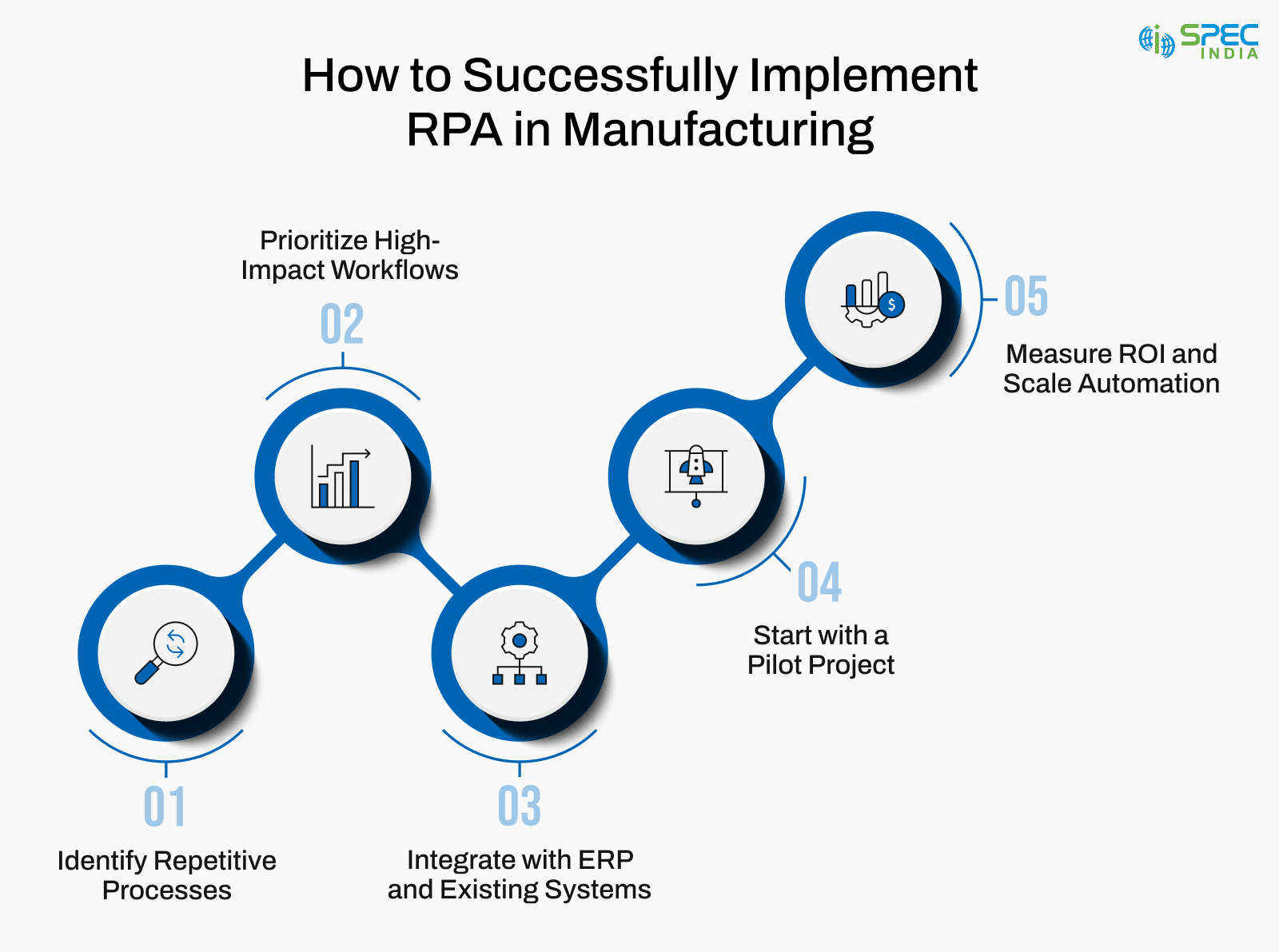
Step 1: Identify Repetitive Processes
To begin, create a map of any manual or repetitive tasks in each department. Engage floor teams early, as they have first-hand information on daily pain points. Find activities that occur in the same order every time they are done.
- Review invoice processing and data entry tasks
- Identify tasks with clear, rule-based steps
Clear process mapping lays the foundation for automation.
Step 2: Prioritize High-Impact Workflows
Some processes may not require any automation at this time. Prioritize workflows according to cost, risk, and time saved. Initially implement processes that have tangible business benefits in a short time period.
- Focus on tasks with high error rates
- Target workflows that consume the most staff time
Prioritization ensures faster, more measurable results.
Step 3: Integrate with ERP and Existing Systems
RPA works best when connected to current systems. Weak integration often causes automation projects to stall. A well-connected environment keeps information accurate across business applications.
- Sync bots with ERP and MES platforms
- Maintain close integration across operational systems
Strong integration prevents disconnected, siloed automation efforts.
Step 4: Start with a Pilot Project
Test automation within a single process before scaling. This helps maintain low risk early while building confidence as the organization matures. A pilot is needed to help teams understand, from a practical standpoint, the benefits of AI automation solutions.
- Choose a low-risk, high-visibility workflow
- Gather feedback from the teams involved
Pilot projects reduce risk and prove value early.
Step 5: Measure ROI and Scale Automation
Watch closely before continuing automation further. Be sure to use metrics such as hours saved and error rates that are easy to explain. Apply these learnings to improve future automation programs and deliver stronger long-term results.
- Compare time saved against RPA development cost
- Extend successful bots to other manufacturing processes
Gradual automation of manufacturing workflows creates sustainable solutions. Manufacturers can standardize this process across plants and departments with workflow automation services.
Why Manufacturers Choose Custom RPA Solutions Over Generic Automation Tools
Off-the-shelf tools work fine for simple tasks. Manufacturing operations involve complex, interconnected systems, though. Generic tools often cannot fully support these systems. They also struggle to adapt as manufacturing workflows become more specialized and interconnected. This shift supports the broader move toward digital manufacturing.
Why Enterprises Need Tailored Automation
Custom RPA solutions adapt to each manufacturer’s unique processes and legacy systems.
- Support ERP, MES, and SCM integration
- Handle industry-specific, intelligent automation services
- Scale alongside growing production volumes
- Strengthen security and governance controls
Custom automation delivers flexibility that generic tools cannot match.
RPA for manufacturing works best when tailored to real operations. It should account for production processes and industry regulations. Manufacturing process optimization requires automation that scales with operations. A leading global manufacturer, for instance, may run different workflows at every plant. Generic tools rarely handle that level of variation well.
According to Grand View Research, the global RPA market was valued at USD 4.7 billion in 2025. It is projected to reach USD 35.8 billion by 2033. That reflects a strong 29.0% CAGR.
| Custom RPA Solution | Generic Automation Tool |
|---|---|
| Tailored workflows | Fixed, generic templates |
| Enterprise integrations | Limited system compatibility |
| Scalability | Restricted growth capacity |
| Business-specific automation | One-size-fits-all approach |
| Long-term flexibility | Frequent replacement needs |
For manufacturers, automation cannot work as a fixed template. Every production environment has different workflows, systems, approvals, exceptions, and compliance needs. A custom RPA solution gives enterprises the flexibility to automate processes around their actual operations instead of adjusting operations around a generic tool.
This makes tailored automation more suitable for manufacturers that need long-term scalability, deeper system integration, and process-specific control across production, inventory, quality, finance, and supply chain workflows.
Build Custom RPA Solutions That Fit Your Manufacturing Business
Partner with SPEC India to develop secure, scalable RPA solutions that integrate seamlessly with your systems and manufacturing workflows.
Why Choose SPEC India as Your Manufacturing RPA Partner?
RPA works best when it solves a defined process problem rather than automating tasks in isolation. For manufacturers, that means examining the complete workflow, existing ERP and MES systems, data handoffs, decision points, and areas where manual work causes delays or errors.
SPEC India takes this approach to manufacturing automation by evaluating the process before selecting the automation method. Depending on the workflow, this can involve RPA, API integration, or intelligent automation working together. This helps manufacturers avoid disconnected bots and build automation that can scale with their operations.
In practice, this approach typically focuses on questions such as:
- Where are teams repeatedly entering the same data across systems like ERP, MES, or spreadsheets?
- Which approval or reporting steps are slowing down production or procurement cycles?
- Where do manual handoffs between departments create delays or errors?
- Which processes can be standardized before automation is introduced?
SPEC India’s manufacturing experience also includes a Beacon-Based Asset Tracking solution that replaced cumbersome spreadsheet-based tracking with real-time asset visibility. The solution improved visibility, reduced errors, helped staff locate assets faster, and supported better workflow decisions.
For manufacturers evaluating RPA, the priority should be automation that fits existing systems, addresses measurable operational problems, and creates a foundation for broader intelligent automation. SPEC India combines manufacturing domain knowledge, custom RPA development, enterprise integration, and analytics to support that transition.

SPEC INDIA is your trusted partner for AI-driven software solutions, with proven expertise in digital transformation and innovative technology services. We deliver secure, reliable, and high-quality IT solutions to clients worldwide. As an ISO/IEC 27001:2022 certified company, we follow the highest standards for data security and quality. Our team applies proven project management methods, flexible engagement models, and modern infrastructure to deliver outstanding results. With skilled professionals and years of experience, we turn ideas into impactful solutions that drive business growth.
Table of contents
Delivering Digital Outcomes To Accelerate Growth
Let’s TalkTable of contents
Delivering Digital Outcomes To Accelerate Growth
Let’s TalkRelated Blogs

Let’s get in touch!
India
SPEC House, Parth Complex, Near Swastik Cross Roads, Navarangpura, Ahmedabad 380009, INDIA.
-
 +91-79-26404031, 32-33-34
 -
 [email protected]