

Data Science in Retail: From Data-Driven Insights to Smarter Decisions
March 5, 2026
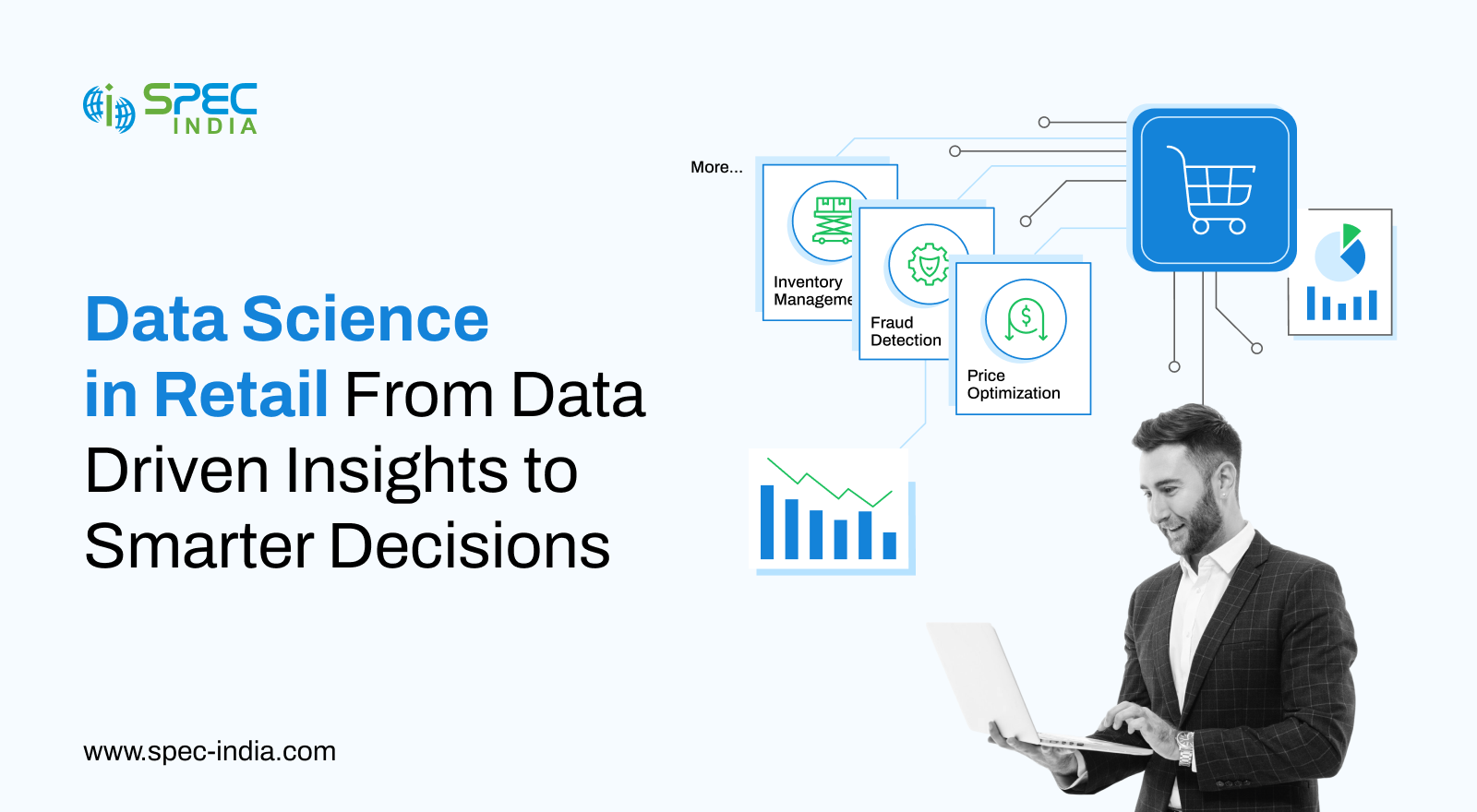
At the peak of demand, your best-selling item sells out. A product you had hoped would be successful fails miserably. Simultaneously, a slow-moving force continues to build in the warehouse, affecting the bottom line. Every day brings views, but too often, it seems like you are reacting instead of planning for the future.
For the multitude of retailers today, this is just business as usual. Customers are asking for more than ever before, and the pace of change is accelerating rapidly. They expect perfect experiences in physical stores and online, instant product availability, and proven relationships. The retailers are facing difficulties due to varying demand, rising operational costs, and competition from traditional brands and new digital players.
Understanding Data Science in Retail
Retail data science is more than a dashboard or a sales report. Retail data science applies analytics, statistical models, and machine learning to retail data and provides informed business decisions. Retail data science does not focus on the past but focuses on trends, predicts the future, and suggests how to optimize the retail value chain.
How Retail Data Is Collected and Unified
Retail data is collected from different sources like POS systems, ERP systems, CRM systems, e-commerce platforms, mobile apps, loyalty programs, and supply chain management systems. Although each of these systems is a source of valuable data, the problem is that the data is fragmented, and there is no context between the different systems.
Moving Beyond Traditional Retail Reporting
Traditional retail reporting is all about looking at the past, with the emphasis on historical data, monthly sales reports, static key performance indicators, and looking back. While this is useful, the data is often stale and does not have the ability to impact real-time business decisions in today’s fast-paced retail world.
Data science adds value to reporting by using predictive and prescriptive analytics. This enables retailers to predict demand, evaluate business scenarios, and estimate the potential outcome of decisions before they occur.
The firms that possess the ability to transition from descriptive analytics to predictive analytics possess the ability to enhance the accuracy of decision-making efficient up to a great extent.
Why Data-Driven Insights Are Essential for Retail Growth
Retail is a low-margin business, where small mistakes can lead to huge financial repercussions. Using intuition or outdated information can be risky, especially in a scenario where factors such as fluctuating demand and shifting consumer behavior can cause uncertainty. Insights from data can provide the clarity required to make accurate and confident decisions.
Organizations that use data are 23 times more likely to gain customers and 19 times more likely to be profitable, according to McKinsey.
Reducing Risk in an Unpredictable Market
The retail market is affected by factors such as seasonality, economic patterns, and other external events. Data science enables retailers to analyze and forecast these factors, predicting what the results may be. This helps to make it easier to prepare for the results.
By using predictive analytics, retailers can better plan their promotions, workforce, and inventory even in unpredictable market conditions.
Aligning Teams with a Single Source of Truth
The retail industry is faced with the challenge of having different views among various teams. The marketing, buying, finance, and operations teams may be working with different data points and assumptions. Data-driven insights help to provide a single source of truth.
Retail Analytics and Insights as a Strategic Capability
Retail analytics is no longer a reporting function. It is becoming the operating model for modern retail businesses. Rather than waiting for the weekly or monthly report, today’s retailers require real-time visibility into their performance for products, stores, regions, and sales channels. This provides a constant stream of insights that enable teams to detect problems early, respond quickly, and make decisions based on what is happening now, not what happened weeks ago.
Detecting Trends and Patterns Early
- Detecting Problems Before They Escalate
Retail analytics enables the early detection of signs of change, such as shifting customer behavior or product performance, before they become more serious problems.
- Understanding Demand and Engagement Shifts
Analyzing customer behavior and regional performance enables retailers to rapidly understand how demand and engagement patterns are shifting in different markets.
- Responding Proactively, Not Reactively
Early trend detection allows retailers to adjust pricing, promotions, inventory, or merchandise before issues become more serious.
Driving Continuous Optimization
- Embracing Ongoing Improvement, Rather Than One-Time Fixes
Improving as a retailer usually means making many small improvements. Analytic retailers are receptive to ongoing improvement. They are continually assessing and optimizing price, promotion, and product, as opposed to one-time adjustments.
- Leveraging Real-World Performance Data to Inform Decisions
Retail analytics helps retailers figure out what does and doesn’t work. By tracking real-world performance data, retailers can make informed decisions based on facts, not hypotheses.
- Building a Continuous Feedback Cycle
Continuous analysis helps build a feedback cycle. Data drives decisions, and decisions drive new data. This helps retailers move forward to better understand why performance varies and how to optimize future performance.
- Unleashing Long-Term Efficiency and Profitability
Small, data-driven gains over the long term can provide massive benefits. This leads to increased operational efficiency, customer satisfaction, and profitability, enabling retailers to build a solid business foundation for the future.
Retail Analytics Insights for Executives
Retail executives operate in a dynamic business environment where making informed decisions on time is paramount. Retail analytics provides insights to retail executives that are intended to offer a clear understanding of the business. This enables retail executives to make decisions with conviction, without being bogged down by complexity.
Offering a Clear Executive View of Business Performance
Retail analytics provides a clear view of business performance by integrating key business metrics such as revenue growth, profitability, customer lifetime value, and business efficiency into a simple and easy-to-read format. The use of visual dashboards makes it easy to simplify complex data, allowing executives to quickly assess business performance and pinpoint areas that need improvement.
Faster Decision Making with Real-Time Insights
Real-time analytics eliminates the lag associated with reports that are no longer current. Executives can quickly make decisions based on market changes, business problems, or opportunities, ensuring that decisions are made on time and based on current data.
Smarter Strategic Planning and Forecasting
Retail analytics assists in strategic planning by offering insights into trends, forecasts, and early warnings of potential risks. Executives can analyze different scenarios and make decisions with confidence, planning for the future using data instead of assumptions.
Accurate Measurement of Strategic Outcomes
Executive analytics ensures the measurement of the outcomes of initiatives through measurable KPIs. This ensures that the progress is on track with the overall business strategy.
Supporting Expansion and Investment Decisions
Investment and expansion are some of the most important decisions that retail executives have to make. These include profitability, business complexity, and future growth. Whether it is an entry into a new geography, opening new stores, building e-commerce, or technology investments, these include critical financial and risk inputs.
Assessing Market Expansion Opportunities
Retail analytics takes into account the performance of different regions, customer demand, and market trends to make well-informed decisions on opening new stores or expanding into new markets. Executives can assess the opportunities and risks involved before making critical investments.
Evaluating High Impact Investments
When multiple investment opportunities are vying for attention, analytics assists retail executives in evaluating and prioritizing investments based on their return potential, risk, and business strategy. This ensures that investments are made in areas where they can generate maximum value in the long run.
Return on Investment Forecasting
Based on predictive analytics, retail executives can forecast the return on investment of expansion or investment decisions.
Risk Minimization in Capital Expenditure
With the help of data insights, executives can spot potential risks early on and avoid making costly expenditures that are not in line with market requirements.
Enhancing Accountability and Governance
As retail businesses grow in terms of size and complexity, it becomes even more challenging to ensure good governance and accountability. Inconsistent reporting and a lack of clarity on accountability can be created by various teams, geographies, and systems. Retail analytics eliminates this problem by providing consistent and clear visibility into business performance at the department, store, and regional level.
Building the Single Source of Truth
Retail analytics brings together information from different systems into one source that can be relied on. This helps to overcome the challenges of inconsistent reporting and ensures that there is consistency in decision-making for the business.
Aligning the Different Departments
With a common view, the marketing, operations, finance, and merchandising departments are all aligned on a set of goals and expectations. This helps to facilitate collaboration and overcome inconsistencies between different departments.
Enhancing Performance Accountability
Analytics helps to measure performance and provides insights into the role of different teams’ efforts in the performance of the business. This helps to ensure accountability and ownership at all levels.
Improving Governance and Compliance
Consistent reporting and standardized metrics help improve governance. Executives can be confident that business decisions are made with accurate, compliant, and auditable data.
Retail Inventory Management Systems and Forecasting Challenges
Inventory management is regarded as one of the most expensive and difficult processes in retail. Overstocking means that working capital is tied up and has to be sold at a discount. On the other hand, stockouts mean lost sales and unhappy customers.
Modern retail inventory management systems, which use data science, connect supply with actual demand patterns. This improves availability and reduces waste.
The Cost of Inventory Distortion
The cost of inventory distortion for retailers is estimated to be around $1.1 trillion per year by IBM, due to overstocking and stockouts. This shows the need for inventory management using data.
Improving Inventory Visibility Across Channels
Data science helps provide real-time visibility of inventory across stores, warehouses, and distribution centers.
Retail Data Science for Demand Forecasting
Demand forecasting has always been a difficult task for retailers. Customer demand is driven by a variety of factors, including seasonality, price, promotions, and regional preferences. Moreover, external events also influence customer demand. Conventional methods of demand forecasting use averages, which ignore the varying factors mentioned above.
Seasonal and Promotional Demand Forecasting
Seasonal demand and promotions are important considerations for retail demand. Retail data science solutions allow retailers to predict the impact of holidays, promotions, or product launches on demand. This helps retailers to prepare in advance and not at the last minute.
With the right demand forecast, retailers can provide adequate inventory, minimize the cost of point-of-sale replenishments, and avoid lost sales during peak periods.
Improving Forecast Accuracy for Regions
Demand patterns differ considerably across regions, stores, and customer segments. Retail data science analyzes regional data to provide forecasts for each region, unlike traditional forecasting methods that provide a one-size-fits-all solution.
Regional forecasting enhances inventory management, store performance, and enables data-driven merchandising decisions for the retail business as a whole.
Marketing Customer Segmentation in Retail
Marketing customer segmentation is the use of data science to segment customers according to behavior, value, and intent. This enables retailers to communicate and offer tailored to particular customer segments. As reported by PwC, “73% of consumers believe customer experience is an important factor in purchasing decisions, but many feel brands do not understand them.
Analysis of Customer Behavior and Intent
Data science helps in the analysis of purchase behavior, browsing, visiting, and engagement patterns to understand customer intent. The findings help in identifying the customers who are loyal, price-sensitive, and lost customers.
With this information, the retailer can develop strategies to target each group individually, unlike the usual generic marketing campaigns that are normally done.
Optimization of Marketing Efficiency and ROI
Segmented marketing campaigns help in eliminating unnecessary marketing expenses by targeting the profitable customer segments. Retailers can maximize their marketing spending, and this will result in improved conversion rates and returns on investment. Over time, this will assist in improving customer relationships and increasing lifetime values.
Personalized Marketing Campaigns
Personalization has become an important aspect of the retail industry. Customers expect that brands understand their needs and share personalized offers with them at the right time. Personalized marketing campaigns use data insights to meet these requirements.
Retailers who provide the best personalization, according to the Boston Consulting Group, have the potential to increase their revenue from marketing campaigns by 40% compared to retailers who do not.
Sending Relevant and Timely Messages
Data science is used to identify the right time, channel, and message content for marketing messages based on customer behaviour. This will ensure that the messages are received as helpful and not intrusive. By sending messages to customers when they are most likely to respond, retailers have the potential to increase the success of marketing campaigns.
Building an Emotional Bond with Customers
Personalized marketing campaigns allow customers to feel recognized and valued. Over time, this emotional bond will help to build brand loyalty. This shift from transactional marketing to relationship marketing is a crucial step in retail success.
Optimization of Retail Operations Using Data Science
Retail operations are intricate and need optimal management of stores, warehouses, suppliers, and logistics. Small inefficiencies can lead to high costs. Data science helps in pointing out and solving such inefficiencies before they become big problems.
Retail operation optimization uses analytics to enhance retail operations, employees, and supply chain management. According to Deloitte, data-driven operations can increase productivity by as much as 15%.
Improving Workforce Planning and Productivity
Data science helps in analyzing customer traffic, sales, and peak hours. It optimizes the workforce based on customer traffic. This helps in ensuring that the stores are not understaffed during peak hours, but also do not incur high labor costs.
Enabling Multi-Store Omnichannel Retailers
Consistency is the key for multi-store retailers. Data science enables consistent operations with the flexibility to adapt to local market differences. This enables efficient and scalable growth of the retail business.
Have a look at our Retail Data Analytics Dashboard developed through Power BI
How Retailers Use Data Science for Decision Making
Retailers use data science to inform their decisions on pricing, inventory, marketing, and strategic planning. Guesswork is eliminated, and the results are more accurate and consistent.
To understand how retailers use data science to inform their decisions is to recognize the significance of data science as an essential business capability rather than a supplement to the business.
Supporting Strategic and Operational Decisions
Data science can be used to inform both strategic and operational decisions. This is important to ensure that there is alignment between short-term and long-term strategies.
Retailers can be assured that their decisions are data-driven.
Establishing a Data-Driven Retail Culture
When people believe in data, there is more collaboration, and decision-making becomes more objective. This is crucial for long-term retail success.
Retail Digital Transformation via Analytics
Retail digital transformation is not just about technology. It changes how decisions are made. Data science acts as the driving force behind this change, adding intelligence to everyday operations.
Agile and Sustainable Retail Businesses
- Quick Response to Change: Retailers that use analytics can respond quickly to shifts in the market, supply chain, and customer behavior. This helps them stay agile in a fast-changing and uncertain environment.
- Resilience in Operations: Data-driven insights help retailers make informed choices about handling disruptions, managing risks, and ensuring business continuity.
- Embedding Analytics into Business as Usual: Integrating analytics into daily operations lets retailers make decisions faster, better, and more consistently across the organization.
- Creating a Sustainable Competitive Advantage: By making data-driven decision-making a regular practice, retailers can use analytics as a lasting advantage to encourage innovation and growth.
How SPEC India Helps Retailers Make Smarter Decisions
SPEC is a trustworthy ally in retail transformation. They help retailers leverage the latest retail data science services that align analytics with business goals.
From retail analytics and insights to ERP and POS system integration, they create scalable solutions that turn data into action. Their expertise in retail performance analytics, business intelligence, and digital transformation helps retailers collaborate more effectively and develop in a more sustainable way.
SPEC India helps retailers overcome the challenge of data deluge to gain clarity.
Conclusion
Retail success in today’s market is no longer about having more data, but it is about making better decisions with the data. When the insights are late or piecemeal in different systems, retailers are left reacting to issues rather than staying one step ahead of them.
Data science in the retail industry changes this cycle by giving clear and accurate information from raw data. It helps retailers make better predictions, connect with customers in a personal way, improve inventory and operations, and provide real-time information to management. When data is used effectively, decision-making becomes faster, more accurate, and more focused on business needs.
As customer satisfaction expectations rise and competition increases, retailers that use data to guide their decisions will come out on top. Analytics is no longer an afterthought; it has become a key skill that fosters resilience, flexibility, and lasting growth.
Are you ready to make better decisions with your retail data? Let SPEC India help you tap into the real potential of your data and create a future-ready retail business.

SPEC INDIA is your trusted partner for AI-driven software solutions, with proven expertise in digital transformation and innovative technology services. We deliver secure, reliable, and high-quality IT solutions to clients worldwide. As an ISO/IEC 27001:2022 certified company, we follow the highest standards for data security and quality. Our team applies proven project management methods, flexible engagement models, and modern infrastructure to deliver outstanding results. With skilled professionals and years of experience, we turn ideas into impactful solutions that drive business growth.
Table of contents
- Understanding Data Science in Retail
- Why Data-Driven Insights Are Essential for Retail Growth
- Retail Analytics and Insights as a Strategic Capability
- Retail Analytics Insights for Executives
- Supporting Expansion and Investment Decisions
- Enhancing Accountability and Governance
- Retail Inventory Management Systems and Forecasting Challenges
- Retail Data Science for Demand Forecasting
- Marketing Customer Segmentation in Retail
- Personalized Marketing Campaigns
- Optimization of Retail Operations Using Data Science
- How Retailers Use Data Science for Decision Making
- Retail Digital Transformation via Analytics
- How SPEC India Helps Retailers Make Smarter Decisions
- Conclusion
Delivering Digital Outcomes To Accelerate Growth
Let’s TalkTable of contents
- Understanding Data Science in Retail
- Why Data-Driven Insights Are Essential for Retail Growth
- Retail Analytics and Insights as a Strategic Capability
- Retail Analytics Insights for Executives
- Supporting Expansion and Investment Decisions
- Enhancing Accountability and Governance
- Retail Inventory Management Systems and Forecasting Challenges
- Retail Data Science for Demand Forecasting
- Marketing Customer Segmentation in Retail
- Personalized Marketing Campaigns
- Optimization of Retail Operations Using Data Science
- How Retailers Use Data Science for Decision Making
- Retail Digital Transformation via Analytics
- How SPEC India Helps Retailers Make Smarter Decisions
- Conclusion
Delivering Digital Outcomes To Accelerate Growth
Let’s TalkRelated Blogs
Let’s get in touch!
India
SPEC House, Parth Complex, Near Swastik Cross Roads, Navarangpura, Ahmedabad 380009, INDIA.
-
 +91-79-26404031, 32-33-34
 -
 [email protected]