| Legacy System Type | Common Challenges |
|---|---|
| Electronic Health Record Systems |
|
| Hospital Information Systems |
|
| Laboratory Information Systems |
|
| Picture Archiving and Communication Systems |
|
| Radiology Information Systems |
|
| Revenue Cycle Management Tools |
|
| Legacy Telehealth Platforms |
|
| Patient Portals |
|


Loading...
How to Modernize Legacy Systems in Healthcare?
Posted
July 31, 2026
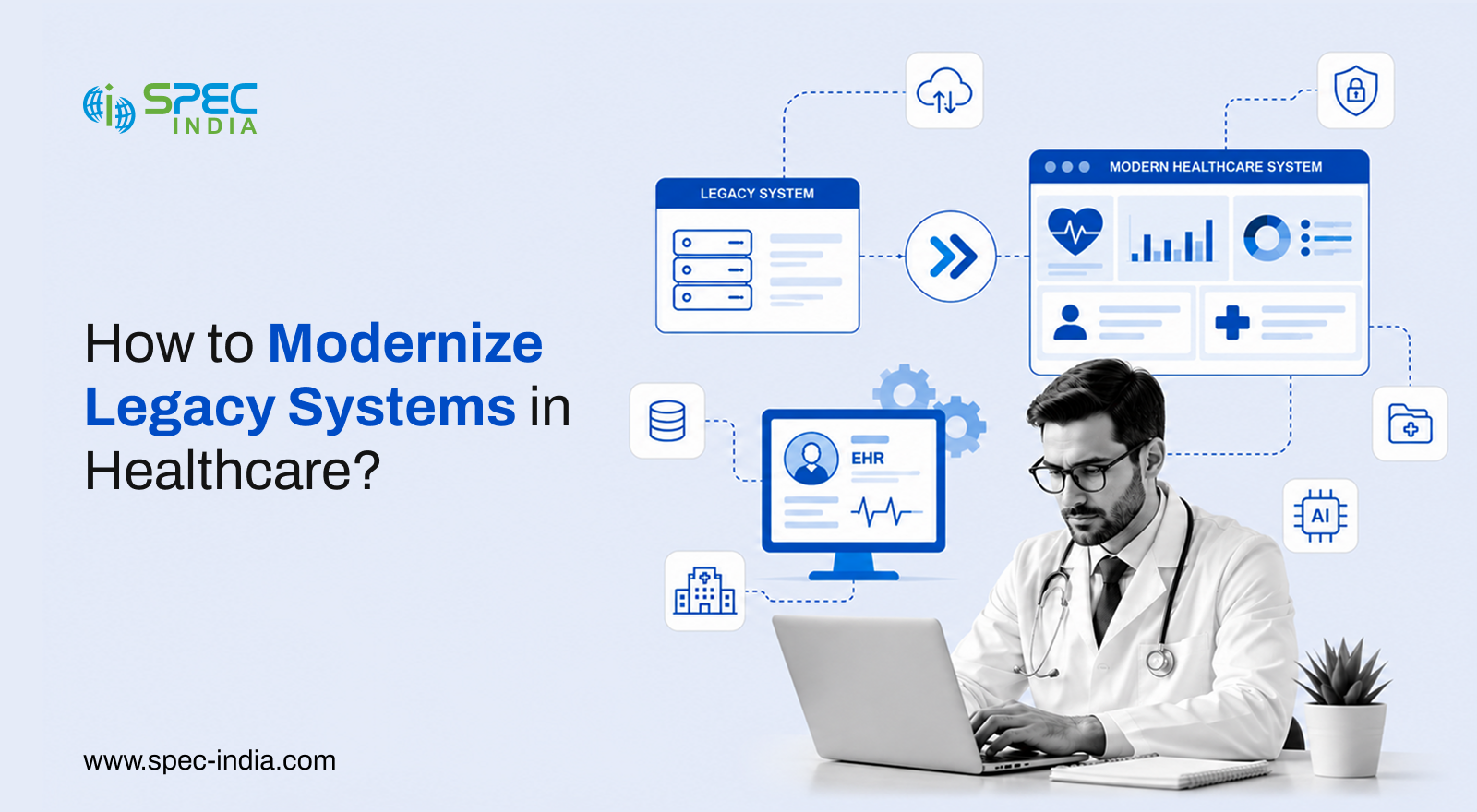
There are a number of legacy systems in healthcare that still power critical operations across hospitals & healthcare organizations today. However, these systems often create more challenges than advantages. How?
Fragmented EHR systems that cannot communicate with each other can lead to HIPAA compliance risks on unpatched software & outdated interfaces. These can slow down clinical workflows. According to stats, over $8 billion is lost across the U.S. healthcare system annually, and one reason is outdated tech.
Despite knowing all this, many healthcare providers still struggle to implement AI diagnostics, telehealth, predictive analytics, & other emerging technologies because their existing systems lack the flexibility to meet modern healthcare demands.
But as healthcare IT modernization accelerates, replacing or upgrading legacy healthcare systems has become increasingly important. These modern-day systems can help improve patient care, strengthen healthcare data security, & achieve seamless data exchange. Over 75% of hospitals are using interoperable systems to ensure seamless data transfer and access.
In this guide, you will learn what a legacy healthcare system is, the proven healthcare system modernization strategies, & a practical roadmap for successful digital transformation.
What Are Legacy Systems in Healthcare?
By definition, legacy systems in healthcare no longer meet modern standards for interoperability, security, scalability, or clinical workflows.
- Software applications
- Hardware platforms
- IT infrastructure
While these systems remain fully-operational, they are often built on outdated tech & lack vendor support. Besides, they cannot integrate with modern systems through APIs or standardized data exchange protocols.
Many healthcare organizations continue managing legacy systems because they support critical operations & contain years of patient data. However, maintaining outdated systems can
- Create integration gaps
- Increase security risks
- Hinder regulatory compliance
- Limit an organization’s ability to adopt emerging technologies such as AI, automation, and advanced analytics
Examples of healthcare legacy systems include
- On-premise servers
- Legacy EHR systems
- Standalone billing applications
- Aging PACS
- RIS platforms
And other legacy information systems that struggle to support modern healthcare delivery.
Common Types of Healthcare Legacy Systems
Healthcare organizations often rely on legacy systems across patient care, hospital administration, diagnostics, billing, and medical data management. While these platforms may still support essential operations, limited interoperability, outdated architecture, security risks, and integration gaps can restrict efficiency and digital growth. Understanding the common types of healthcare legacy systems helps organizations identify where modernization can deliver the greatest clinical and operational value.
Organizations that are investing in healthcare IT modernization & healthcare software development services can replace these healthcare legacy systems with secure, interoperable, and scalable platforms.
8 Warning Signs Your Healthcare Systems Need Modernization
Healthcare legacy systems do not fail all of a sudden. They show early warning signs that slowly impact patient care, operational efficiency, & regulatory compliance.
1. Chronic System Slowdowns
Slow app performance makes healthcare pros spend 2x more time navigating healthcare systems than treating patients. This delayed access to data can impact clinical workflows & care delivery.
2. Frequent Downtime and Crashes
System failures in important healthcare systems can disturb
- Appointments
- Diagnostics
- Treatment processes
Frequent outages also reduce staff productivity & patient trust. The Paubox Report states that 83% of healthcare IT teams report that legacy systems disrupt their day-to-day operations.
3. Poor Interoperability
EHR systems, labs, imaging platforms, & referral networks are critical for healthcare, and when these systems cannot communicate with each other, it generates data silos. Poor healthcare interoperability hinders seamless data exchange & leads to duplicate work.
4. Inability to Meet Changing Compliance Standards
Healthcare regulations continue to change & legacy software often struggles to support requirements set by
- HIPAA
- GDPR
- HL7 FHIR
This increases compliance challenges and audit risks.
5. Skyrocketing Maintenance Costs
Maintaining outdated systems requires
- Continuous patching
- Specialized resources
- Aging hardware platforms
In many cases, the hidden costs of maintaining legacy systems exceed modernization investments.
6. Weak Cybersecurity Posture
Older systems frequently lack
- Advanced encryption
- MFA
- Audit trails
- Robust security measures
This significantly increases healthcare data security risks and exposure to data breaches.
7. No Path to AI or Automation
Legacy infrastructure often cannot support
- AI diagnostics
- Robotic process automation
- Predictive analytics
- Advanced analytics tools
This limits innovation and slows healthcare technology modernization initiatives.
8. Poor User Experience Killing Staff Productivity
Outdated UIs & complex workflows encourage manual workarounds & repetitive data entry. Over time, these inefficiencies increase the risk of errors & decrease overall operational efficiency.
Organizations experiencing several of these challenges should view them as clear indicators for digital transformation to happen. As the market competition intensifies, healthcare is no longer optional, but essential.
The 6 Core Modernization Approaches
Modernizing every healthcare legacy system in the same way can increase cost, risk, and operational disruption. Some applications may only require infrastructure migration, while others need code-level improvements or complete architectural transformation. Understanding these six core modernization approaches helps healthcare organizations select the right strategy based on system complexity, business value, compliance needs, and future goals.
| Approach | When to Use It |
|---|---|
| Rehosting (Lift & Shift | his approach includes moving applications to the cloud with minimal code changes. The method of rehosting is best for organizations seeking quick healthcare cloud migration & reduced infrastructure costs. |
| Refactoring delivers multiple benefits, such as improving | Refactoring delivers multiple benefits, such as improving
All of this without changing the application’s core architecture |
| Rearchitecting | Turning monolithic applications into microservices-based systems. This allows for greater
|
| Rebuilding | Develop an application from the ground up when the legacy software is too outdated. |
| Replacing | Retire the existing system & install a commercial off-the-shelf or custom-built alternative. This better aligns with present business needs. |
| Encapsulation | Extend the lifespan of legacy systems by exposing their functionality through APIs. This allows for integration with modern healthcare applications. |
Key Technologies Supporting Modernization
-
Microservices Architecture
Microservices architecture is a modular approach that allows you to break large applications into smaller, independent services. As compared to the whole app, these can be
- Updated
- Scaled
- Deployed individually
This improves agility and system performance.
API-First Development
Modern healthcare software modernization significantly depends on APIs to connect
- EHRs
- Billing platforms
- Patient portals
- Third-party applications
Effective healthcare API integration enables seamless data exchange across multiple systems.
Cloud-Native Platforms
Platforms such as AWS, Azure, and GCP support
- Scalable infrastructure
- Disaster recovery
- Cloud-based backup solutions
- Stronger healthcare data security
Several organizations use cloud migration services as a foundation for modernization.
HL7 FHIR Interoperability Standards
HL7 FHIR has become the preferred standard for healthcare interoperability lately. It enables secure, real-time data sharing between healthcare systems, providers, & applications while supporting evolving regulatory requirements.
Whether you choose rehosting, re-platforming, or complete replacement, a structured modernization strategy is essential. For applications moving to cloud infrastructure, a secure healthcare cloud migration strategy can help protect sensitive patient data, maintain regulatory compliance, and reduce disruption during the transition.
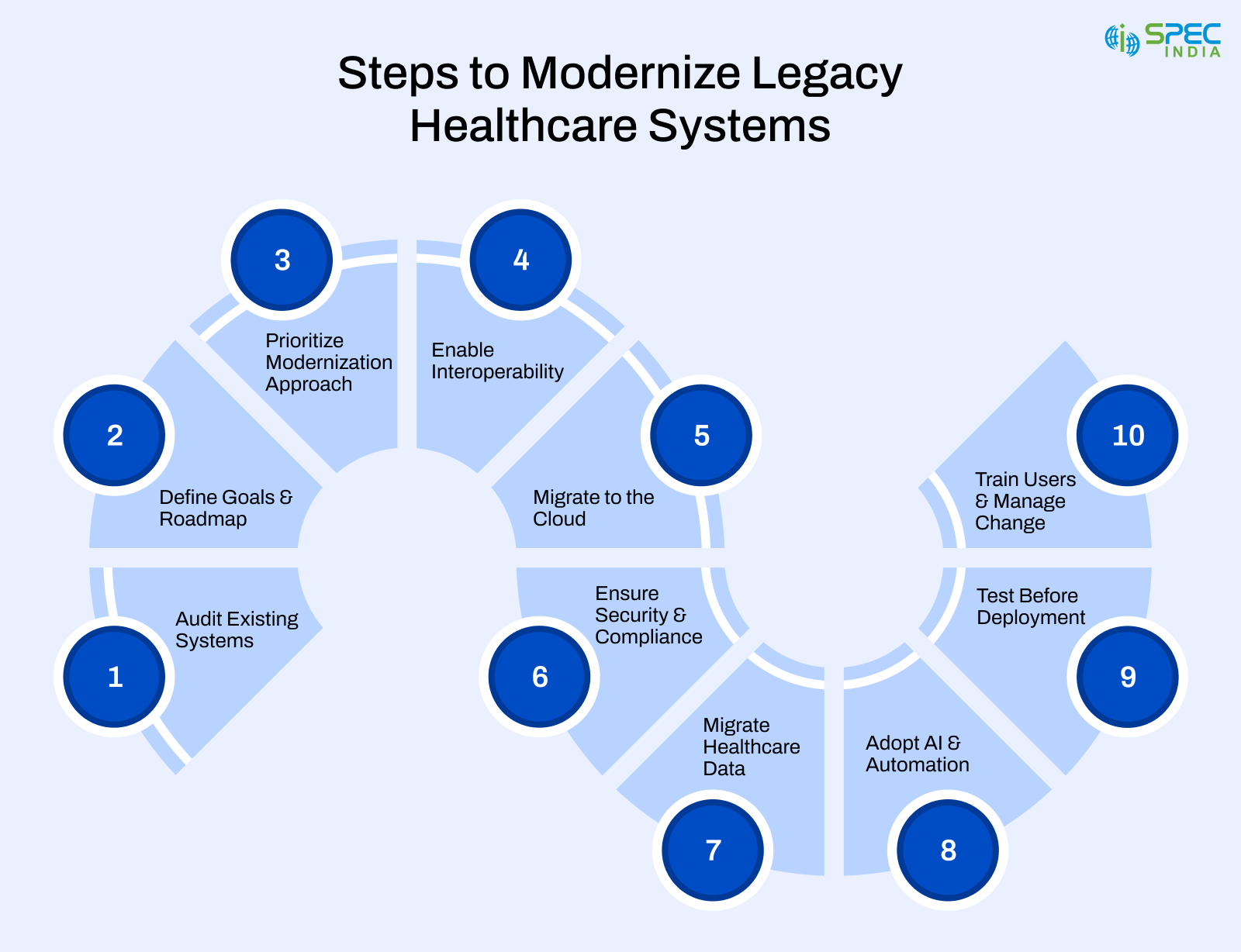
An End-to-End Roadmap for Healthcare Legacy System Modernization
Successful healthcare system modernization requires more than getting rid of old technology. They require a clear and transparent process that eliminates operational risk, protects patient data, & supports long-term growth.
Step 1: Conduct a Whole System Audit
The first step is to audit all the
- Legacy systems
- Applications
- Databases
- Hardware platforms
- Integrations across departments
Assess aspects like
- System performance
- Security vulnerabilities
- Vendor support status
- Maintenance costs
- Total cost of ownership (TCO)
Always prioritize important systems that directly impact patient care & clinical workflows. Many healthcare ventures partner with providers offering custom software development services to evaluate modernization requirements.
Step 2: Define Business Goals and Modernization Objectives
Make sure that technology decisions align with business outcomes. Establish clear goals, such as
- Improving patient outcomes
- Reducing operational costs
- Enhancing healthcare data security
- Supporting telehealth expansion
- Achieving regulatory compliance
- Preparing for AI adoption
Or all of them.
Step 3: Choose the Right Modernization Strategy
The next step is selecting the right strategy depending on audit findings & goals. Rehosting may be sufficient for some apps, but others may require
- Refactoring
- Rearchitecting
- Rebuilding
- Replacement
Working with experts in legacy application modernization services helps businesses choose the best path.
Step 4: Build an Interoperability-First Architecture
Healthcare interoperability must be a prime need for businesses aligning towards modernization. They must implement HL7 FHIR-compliant APIs that can help eliminate integration gaps between different systems, like
- EHR systems
- Laboratory platforms
- Imaging systems
- Patient portals
- Billing applications
Effective healthcare API integration allows for seamless data exchange & improves care coordination.
Step 5: Plan and Execute Healthcare Cloud Migration
Modern healthcare systems require a scalable infrastructure. Hence, businesses must migrate workloads from on-premise environments to public, private, or hybrid cloud platforms.
A well-defined cloud migration in healthcare initiative can improve
- Scalability
- Disaster recovery
- Remote accessibility
- Operational efficiency
Following a structured cloud migration strategy helps minimize disruption during the transition.
Step 6: Strengthen Healthcare Data Security and Compliance
Legacy healthcare equipment poses operational risks, and 73% of healthcare providers still rely on legacy IT systems. Hence, besides modern equipment, healthcare data security must be embedded into every stage of the modernization process.
For this, healthcare businesses must implement the following.
- Zero-trust security models
- Advanced encryption
- MFA
- Role-based access controls
- Comprehensive audit trails
Ensure compliance with HIPAA, GDPR, SOC 2, and other healthcare regulations throughout the modernization process.
Step 7: Execute Careful Data Migration
Legacy data migration is the highest-risk phase in the healthcare digital transformation procedure.
Healthcare brands must
- Profile & cleanse data before migration
- Remove duplicates
- Standardize formats
- Map information to new data models
You can use ETL processes to move data while preserving data integrity & validating records before deploying.
Step 8: Integrate AI, Automation, and Advanced Analytics
Modern infrastructure enables capabilities that legacy technology cannot support. Healthcare organizations can implement
- AI diagnostics
- Predictive analytics
- Robotic process automation
- Intelligent scheduling
- Clinical decision support systems
Investments in AI consulting in healthcare and data visualization in healthcare help maximize the value of advanced systems.
Step 9: Test Rigorously Before Full Deployment
Conduct comprehensive testing across all environments, such as validating
- Functionality
- Integrations
- Performance
- Security controls
- Compliance requirements
- User workflows
If you pilot the deployments within a single department first, you can identify issues before enterprise-wide implementation.
Step 10: Train Staff and Manage Change Effectively
Technology adoption depends on people. To ensure an easier and faster transition, you must provide
- Role-based training
- Hands-on workshops
- Documentation
- Ongoing support
Early stakeholder involvement helps reduce resistance & improves adoption across healthcare facilities.
Step 11: Monitor, Optimize, and Iterate Post-Launch
Healthcare digital transformation does not end at deployment. Healthcare organizations must track system performance using KPIs, such as
- Uptime
- Response times
- Error rates
- Security incidents
- User satisfaction
Monitoring tools can help organizations identify optimization opportunities & adapt to changing healthcare technology trends.
Partnering with experienced software development companies promises continuous improvement as healthcare needs change.
Healthcare Legacy System Modernization | Practical Examples
Healthcare organizations across the globe are modernizing legacy technology for several benefits, including
- Improve process efficiency
- Care quality
- Operational outcomes
| Use Case | Problem | Solution | Business Outcome |
|---|---|---|---|
| EHR Consolidation Across a Multi-Site Network | Multiple facilities operated separate EHR systems. This led to fragmented patient records & duplicate diagnostic testing. | Implemented a central cloud-based EHR platform with API-driven interoperability. |
|
| Remote Patient Monitoring at Scale | Legacy infrastructure could not connect wearable devices or support continuous patient monitoring. | Integrated IoT devices with a centralized patient data platform through modern APIs. |
|
| Revenue Cycle Management Automation | Outdated billing S/W is dependent on manual processes that cause claim denials & reimbursement delays. | Replaced the legacy billing platform with an AI-powered RCM solution. |
|
| AI-Powered Radiology Diagnostics | Legacy PACS infrastructure could not support AI-assisted image analysis. | Modernized imaging systems with AI integration and cloud archiving capabilities. |
|
Key Takeaway: These examples show how healthcare legacy system modernization can boost
- Patient outcomes
- Operational efficiency
- Revenue performance
- Adoption of advanced technologies across healthcare organizations
Key Challenges in Healthcare Legacy System Modernization (And How to Solve Them)
Even well-planned modernization initiatives face obstacles. Understanding these challenges early helps reduce project risk.
| Challenge | Solution |
|---|---|
| Integration Complexity | To connect legacy and modern systems without disrupting daily operations, businesses can use
|
| Data Migration Risks | Preserve data integrity and minimize migration errors with the following methods.
|
| Regulatory Compliance Pressure | Build compliance requirements into architecture, workflows, data governance policies, and security controls from the beginning rather than retrofitting later. |
| Change Management and Staff Adoption | To improve adoption rates faster, here is what you can do.
|
| Budget and Resource Constraints | Break modernization into manageable phases with measurable milestones and ROI targets.
Partnering with experienced software development companies can help control costs and reduce implementation risks. |
Why Choose SPEC India for Modernizing Legacy Systems in Healthcare?
Modernizing healthcare legacy systems requires
- Deep domain expertise
- A strong understanding of regulatory requirements
- Proven experience with complex technology transformations
SPEC India brings decades of software engineering experience, helping organizations modernize outdated applications, migrate to the cloud, and build scalable digital healthcare solutions.
From healthcare software modernization and legacy application reengineering to cloud migration, API integration, and healthcare data analytics, SPEC India offers end-to-end services tailored to the healthcare industry’s evolving needs.
Their team helps healthcare providers modernize EHR systems, integrate disconnected platforms, improve interoperability, and strengthen data security while maintaining compliance with healthcare regulations.
Whether you need to upgrade legacy infrastructure, implement AI-powered healthcare solutions, or accelerate digital transformation initiatives, SPEC India delivers future-ready solutions focused on performance, scalability, security, and long-term business value.
Frequently Asked Questions
A legacy system in healthcare is an older software application, platform, or infrastructure component that remains operational, but no longer meets modern standards for interoperability, security, scalability, or clinical workflows.
Modernization helps eliminate data silos, strengthen healthcare data security, improve regulatory compliance, and support technologies such as telehealth, AI, and advanced analytics. It also improves operational efficiency and patient outcomes.
There is no one-size-fits-all approach. Organizations may choose rehosting, refactoring, rearchitecting, rebuilding, or replacing systems depending on business goals, technical limitations, and budget considerations.
Project timelines vary based on scope and complexity. Smaller cloud migration initiatives may take several months, while enterprise-wide healthcare system modernization projects can extend beyond a year.
Organizations may face increased cybersecurity threats, compliance violations, rising maintenance costs, poor interoperability, and limited ability to adopt emerging healthcare technologies.

SPEC INDIA is your trusted partner for AI-driven software solutions, with proven expertise in digital transformation and innovative technology services. We deliver secure, reliable, and high-quality IT solutions to clients worldwide. As an ISO/IEC 27001:2022 certified company, we follow the highest standards for data security and quality. Our team applies proven project management methods, flexible engagement models, and modern infrastructure to deliver outstanding results. With skilled professionals and years of experience, we turn ideas into impactful solutions that drive business growth.
Table of contents
- What Are Legacy Systems in Healthcare?
- 8 Warning Signs Your Healthcare Systems Need Modernization
- The 6 Core Modernization Approaches
- An End-to-End Roadmap for Healthcare Legacy System Modernization
- Healthcare Legacy System Modernization | Practical Examples
- Key Challenges in Healthcare Legacy System Modernization & Solutions
- Why Choose SPEC India for Modernizing Legacy Systems in Healthcare
Delivering Digital Outcomes To Accelerate Growth
Let’s TalkTable of contents
- What Are Legacy Systems in Healthcare?
- 8 Warning Signs Your Healthcare Systems Need Modernization
- The 6 Core Modernization Approaches
- An End-to-End Roadmap for Healthcare Legacy System Modernization
- Healthcare Legacy System Modernization | Practical Examples
- Key Challenges in Healthcare Legacy System Modernization & Solutions
- Why Choose SPEC India for Modernizing Legacy Systems in Healthcare
Delivering Digital Outcomes To Accelerate Growth
Let’s Talk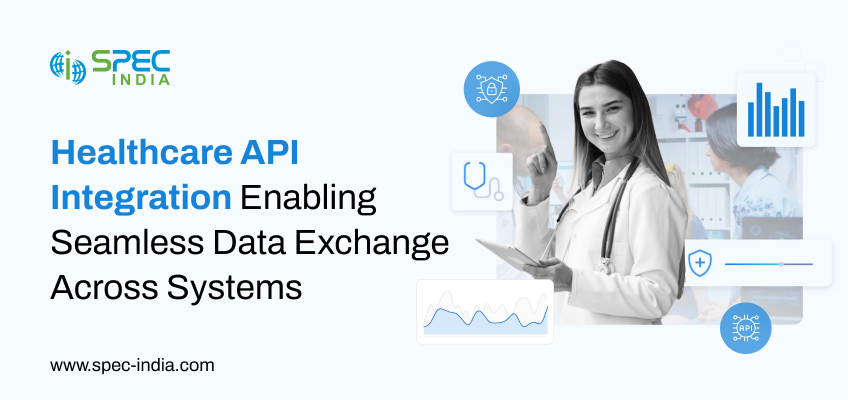
Let’s get in touch!
India
SPEC House, Parth Complex, Near Swastik Cross Roads, Navarangpura, Ahmedabad 380009, INDIA.
-
 +91-79-26404031, 32-33-34
 -
 [email protected]