| Feature | What it Does | Business Impact |
|---|---|---|
| Supplier Lifecycle Management | Supplier onboarding, qualification, risk scoring, and offboarding are managed through a single system and maintain a single record. | Reduces supplier risk exposure and shortens onboarding time, leading to a smoother experience for everyone. |
| Purchase Requisition and PO Automation | Structured requisition capture with automatic PO generation, eliminating re-entry and mixing of data. | Effectively reduces manual processing time and manual data entry errors. |
| Approval Workflow Automation | Configurable rules-based information and data routing by spend threshold, category, or business unit, cutting cycle time significantly. | Reduces approval cycles from days to hours, enabling timely orders and deliveries and near-zero management issues. |
| Contract Management | Digital procurement tools help managers with a centralized repository with renewal alerts, obligation tracking, and clause-level search to ensure all contracts are honored on time. | Zero missed obligations and automated renewals of contracts, which means a smoother business experience for every stakeholder. |
| Spend Analytics & Dashboard | Get real-time visibility into every aspect of the product, whether it’s category, supplier, or business unit. | Businesses gain real-time visibility into spend, enabling faster decision-making. |
| Vendor Performance Tracking | Customizable and templated scoreboards help vendors track performance based on delivery timelines, quality metrics, and pricing consistency. | Objective scoring of each vendor strengthens their relationship with the business and helps identify low-performing vendors with evidence. |
| Inventory and Procurement Integration | The digitalized procurement system sends signals from inventory systems towards feeding systems, automating replenishment purchasing. | Since inventory and procurement systems are aligned, the POs reflect actual demand and reduce overstocking. |
| ERP Integration | ERP integration ensures bidirectional data flow, enabling financial and operational systems to work together. | An update in one system reflects in the other without rework or re-entering the same data, eliminating duplicate entry. |
| AI-Powered Procurement Insights | Predictive insights and analytics flag price volatility, supplier risk, and consumption anomalies, offering actionable suggestions. | Advanced AI predictive digital procurement systems help identify cost-saving opportunities before budget cycles close. |
| Mobile Procurement Access | Everything you can access and do on a desktop is also available on mobile, allowing you to track requests and submit approvals. | Approval cycles don’t get delayed or detracted, as you can do everything on mobile. |


Loading...
Digital Procurement Solutions for Enterprises: Streamline Procurement with Automation
Posted
August 12, 2026
Category Digital Transformation
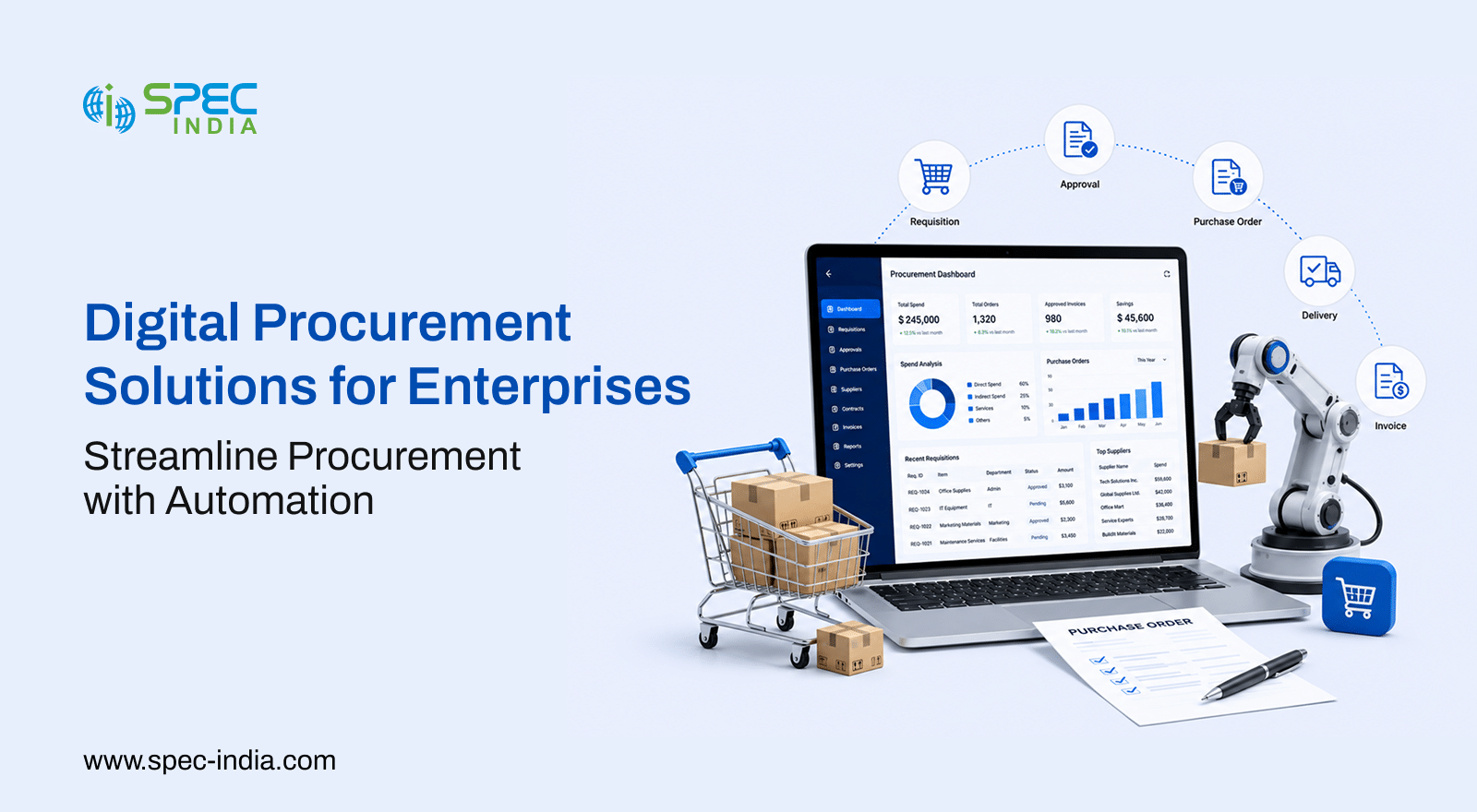
Traditional procurement processes were built for a world of predictable supply chains and manageable transaction volumes, but that world is long past; today, digital procurement is the only way to help procurement managers get a good night’s sleep.
AI adoption in procurement is now mainstream, with 75% of organizations reporting increased investment. As a result, procurement is moving from manual approvals to AI-based workflows and autonomous decision-making.
A procurement team running purchase requisitions through email threads and spreadsheets isn’t just slow, but structurally incapable of scaling with the business.
This is why digital procurement solutions for enterprises have moved from IT wish-list to board-level priority, signaling a rearchitecture of how procurement operations function, whether it’s requisition to payment, from supplier onboarding to contract renewal.
What enterprises gain isn’t just procurement efficiency; they also gain the ability to negotiate better terms, spot cost-saving opportunities before budgets are locked, and turn procurement from a cost center into a function that drives measurable business growth.
What is Digital Procurement?
Digital procurement is the end-to-end digitization of the source-to-pay cycle, which includes;
- Requisitioning
- Sourcing
- Purchase order generation
- Invoice matching
- Supplier management
- Analytics
All these processes run on a connected digital procurement platform rather than on independent digital tools and manual handoffs.
Traditional procurement processes typically automate parts of the process, leaving non-automated steps to be completed in spreadsheets, creating a disconnect.
Digital procurement removes those seams, as every transaction, every approval, every supplier interaction lives in a single system of record, feeding a single data layer that procurement leaders can query in real time.
Hence, the core motive of digital procurement solutions for enterprises isn’t automation but better control and full visibility into spend, risk, and supplier performance, without waiting on month-end reports.
Enterprise Challenges Digital Procurement Solutions Solve
Most enterprises, when working on a flawless growth plan, don’t fail at procurement strategy; they fail at execution because the underlying systems can’t support the strategy they have already written.
- Manual Procurement Workflows: Requisitions routed by email and purchase order data entered manually into ERP systems create points of delay and error when people match invoices. At enterprise transaction volumes, this isn’t an inconvenience; it creates a bottleneck that limits how quickly procurement can move.
- Lengthy Approval Cycles: Multi-tier approvals without automated routing stall in inboxes. A requisition sitting for three days for sign-off isn’t a minor inefficiency; multiply it across thousands of transactions annually, and it directly delays production, project timelines, and vendor payments.
- Limited Spend Visibility: Without consolidated procurement data, finance and procurement often can’t agree on what was actually spent last quarter, let alone forecast next quarter’s spend, which leads to more maverick spending.
- Supplier Management Issues: Supplier records duplicated across ERP systems, spreadsheets, and email make supplier relationship management reactive rather than strategic. Issues surface later, and until then the problem had already taken shape.
- Procurement Compliance Risks: Regulatory requirements in sensitive industries such as pharmaceuticals, financial services, and energy require audit trails that concerned parties can review later. Manual processes make ensuring compliance a scramble during audit season rather than a built-in system behavior.
- Poor Data Accuracy: Manually entered data across disconnected systems introduces errors that compound quickly if not checked and corrected promptly. A single incorrect vendor tax ID or contract term can cascade into payment disputes or compliance exposure.
Digital procurement services address these challenges by consolidating all processes and endpoints into a single connected system, which is precisely why point-solution patches rarely deliver the same return as a properly architected digital procurement platform.
Key Features of a Digital Procurement Solution for Enterprises
A mature digital procurement technology platform isn’t a single tool but represents a stack of interoperating capabilities purpose-built for enterprise-scale procurement operations.
These are a few important features that form the baseline for custom digital procurement solutions, whether you get an off-the-shelf solution. Anything less than these features is not worth building or using.
Benefits of Digital Procurement Solutions for Enterprises
The return on digital solutions for procurement is real in theory; it’s practical and shows up in the numbers procurement leaders report to the board.
- Faster Procurement Cycles: Automated routing and approval workflows compress requisition-to-PO timelines from days to hours, ensuring you are always prepared and never run out of stock.
- Lower Procurement Costs: Automation in procurement reduces manual labor, reduces maverick purchases, and strengthens negotiating leverage through consolidated spend data.
- Improved Supplier Collaboration: Using shared portals and real-time status updates, collaboration on a single platform replaces email chains, strengthening supplier relationships.
- Better Compliance and Audit Readiness: Every transaction completed through the end-to-end digital procurement solutions is logged and traceable, making compliance a routine exercise rather than a quarterly project.
- Increased Spend Visibility: With updated information available in real time, procurement leaders see spend as it happens, where it is happening, and who is spending, not weeks after a decision is made.
- Smarter Purchasing Decisions: Advanced and predictive analytics embedded in the digital procurement and sourcing platform support strategic sourcing over reactive buying, saving you unnecessary expenses.
- Enhanced Operational Efficiency: Procurement teams with automated work can use the additional time to develop supplier strategies and manage risk.
Enterprises that successfully implement digital procurement don’t just save money. They build a Procure-to-Pay (P2P) function capable of responding to supply chain disruptions within days, not months, a genuine competitive advantage when markets shift quickly.
Ready to move procurement operations off spreadsheets and onto a platform built for enterprise scale? SPEC India’s custom software development services for procurement digitization help enterprises architect that transition without disrupting existing operations.
Which Industries Benefit the Most from Adopting Digital Procurement Solutions?
Digital procurement isn’t industry-agnostic in impact; the pain points and payoffs vary sharply by sector.
| Industry | Procurement Challenge | Digital Procurement Benefit |
|---|---|---|
| Manufacturing | The manufacturing industry relies on tight raw material timing, and procurement delays directly disrupt production schedules. | With real-time supplier tracking and the latest digital procurement trends, managers can automate reordering, ensuring every material is always available. |
| Healthcare and Pharmaceuticals | These organizations operate under strict regulatory requirements and rules and must ensure proper tracking of every supplier and batch. | A digital procurement solution provider integrates an audit-ready, compliance-driven workflow system to ensure that every transaction is traceable. |
| Retail and eCommerce | With multiple products ready to be shipped, these organizations require spend visibility across every category, whether it’s a product category, high-SKU products, and more, to determine margin and set prices. | Digital procurement solutions consolidate spending across all categories, providing an in-depth view of expenses and profit margins and laying the groundwork for dynamic pricing. |
| Logistics | Logistics and supply chain management operations require tight integration with the fleet, fuel, and third-party vendors. Establishing this connection manually with separate programs is a significant logistical challenge. | Digital procurement software for large enterprises integrates procurement-led supply chain management operations, ensuring one person can view and manage all from a single platform. With digitized data, access to information is easier in real time. |
| Financial Services | For every financial organization, there’s a heavy compliance burden to maintain vendor contracts and have audit-ready procurement data as part of the compliance process. | Custom software built by a procurement software development company centralizes contract management, featuring audit trails, convenient data updates, and vendor management. |
How to Choose the Right Digital Procurement Solution?
There are several off-the-shelf procurement management software solutions for enterprises available today, and you also have the option to hire a development company to build enterprise procurement software. Here’s how you can choose the right digital procurement solutions.
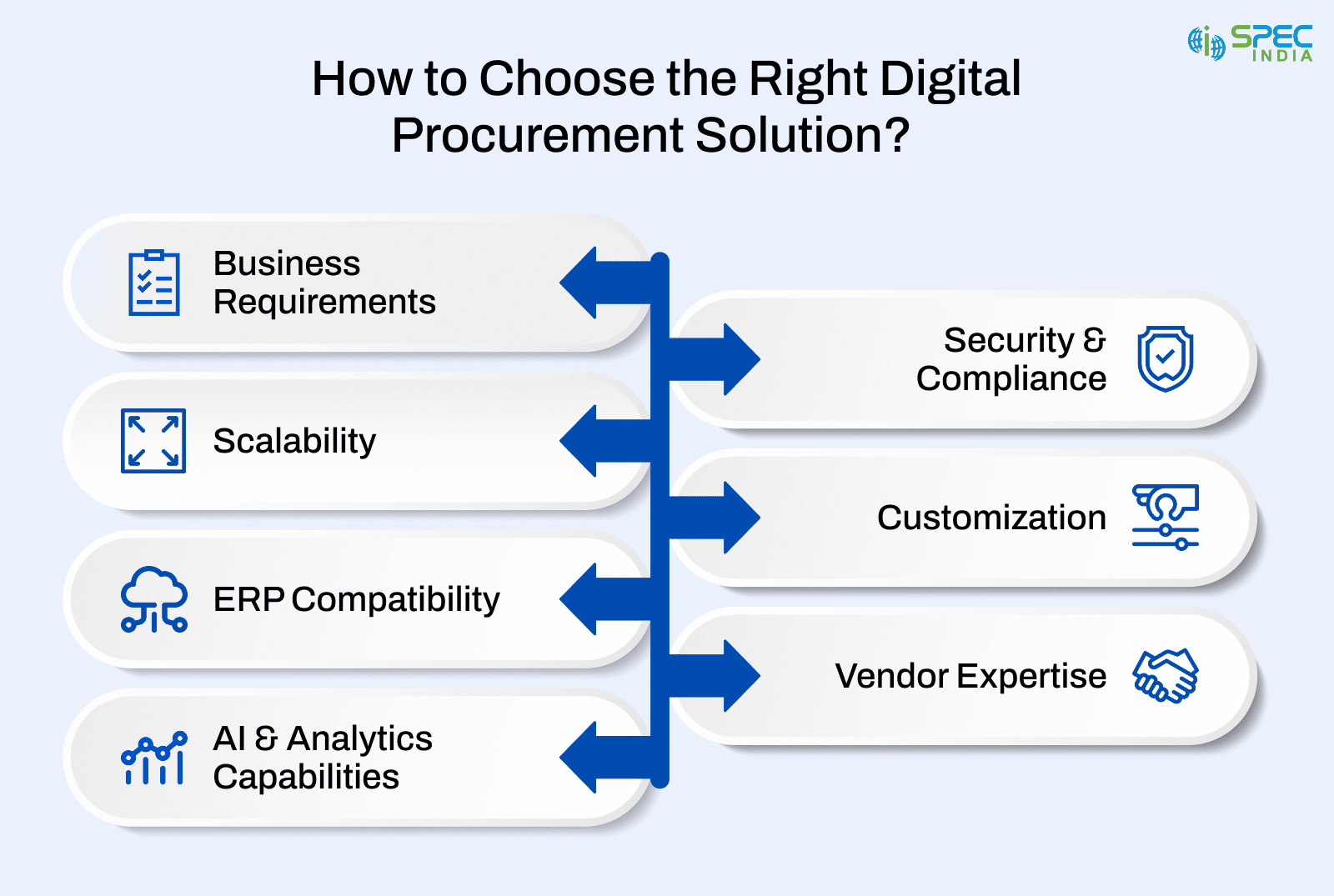
- Business Requirements: Map current procurement workflows before evaluating tools; a platform chosen around generic best practices rarely fits enterprise-specific approval hierarchies or category structures.
- Scalability: A solution that works at the current transaction volume should still perform at three times that volume across new business units and geographies without re-architecture.
- ERP Compatibility: Native or well-documented integration capabilities with existing ERP, finance, and inventory systems determine whether procurement data stays clean or becomes another reconciliation project.
- AI & Analytics Capabilities: Predictive analytics and AI-driven supplier risk scoring separate a modern digital procurement platform from a digitized filing cabinet.
- Security & Compliance: Enterprise procurement data, pricing, contracts, supplier financials, demands security architecture built for enterprise threat models, not consumer-grade SaaS defaults.
- Customization: Rigid, one-size-fits-all workflows force procurement teams to bend their processes to software limitations rather than the other way around.
- Vendor Expertise: A procurement software development company with a proven history of enterprise implementations reduces deployment risk far more than a longer feature list on a sales deck.
Best Practices for Successful Digital Procurement Implementation
The technology behind digital procurement tools may be flawless, but issues may still arise because implementation plays an important role in execution.
- Standardize procurement processes before automating them, as automating a broken workflow just breaks things faster.
- Digitize supplier onboarding to establish clean, structured supplier data from day one rather than retrofitting it later.
- Integrate procurement with the ERP system to keep financial and operational data synchronized without manual reconciliation.
- Automate approvals using clear, rules-based thresholds rather than ad hoc escalation paths.
- Track KPIs like cycle time, cost savings, and supplier performance from the first day of the rollout, not as an afterthought.
- Continuously optimize procurement workflows based on usage data; the first configuration is rarely the final one.
Enterprises that treat implementation as a phased program, going step by step with pilot first and then measuring and expanding, see stronger adoption than those attempting a single enterprise-wide cutover.
Digital procurement strategy should treat change management as seriously as it treats system architecture.
Considering a phased rollout of procurement automation solutions for your organization? SPEC India’s implementation teams have guided enterprise clients through exactly this kind of staged deployment, minimizing disruption to live procurement operations.
Why Choose SPEC India for Digital Procurement Solutions?
SPEC India brings 39+ years of enterprise software development experience to digital procurement transformation, and our work spans industries where downtime and data errors carry real financial consequences.
We custom-build digital transformation solutions for enterprises rather than forcing generic templates and then tailoring them to your needs. Following the latest digital procurement trends, we deliver solutions with deep ERP, SCM, and inventory integration.
Through AI-powered procurement automation, SPEC India helps procurement teams move from reactive purchasing to predictive, data-driven decision-making.
SPEC India’s portfolio of development services also includes ERP software development services delivered with the highest technical rigor, scalability, and creativity.
Have more questions about how to approach digital procurement solutions for enterprises? Let’s have a discussion.

SPEC INDIA is your trusted partner for AI-driven software solutions, with proven expertise in digital transformation and innovative technology services. We deliver secure, reliable, and high-quality IT solutions to clients worldwide. As an ISO/IEC 27001:2022 certified company, we follow the highest standards for data security and quality. Our team applies proven project management methods, flexible engagement models, and modern infrastructure to deliver outstanding results. With skilled professionals and years of experience, we turn ideas into impactful solutions that drive business growth.
Table of contents
- What is Digital Procurement?
- Enterprise Challenges Digital Procurement Solutions Solve
- Key Features of a Digital Procurement Solution for Enterprises
- Benefits of Digital Procurement Solutions for Enterprises
- Which Industries Benefit the Most from Adopting Digital Procurement Solutions?
- How to Choose the Right Digital Procurement Solution?
- Best Practices for Successful Digital Procurement Implementation
- Why Choose SPEC India for Digital Procurement Solutions?
Delivering Digital Outcomes To Accelerate Growth
Let’s TalkTable of contents
- What is Digital Procurement?
- Enterprise Challenges Digital Procurement Solutions Solve
- Key Features of a Digital Procurement Solution for Enterprises
- Benefits of Digital Procurement Solutions for Enterprises
- Which Industries Benefit the Most from Adopting Digital Procurement Solutions?
- How to Choose the Right Digital Procurement Solution?
- Best Practices for Successful Digital Procurement Implementation
- Why Choose SPEC India for Digital Procurement Solutions?
Delivering Digital Outcomes To Accelerate Growth
Let’s TalkRelated Blogs
Let’s get in touch!
India
SPEC House, Parth Complex, Near Swastik Cross Roads, Navarangpura, Ahmedabad 380009, INDIA.
-
 +91-79-26404031, 32-33-34
 -
 [email protected]