

Why Retailers Need ERP and POS Integration for Omnichannel Growth
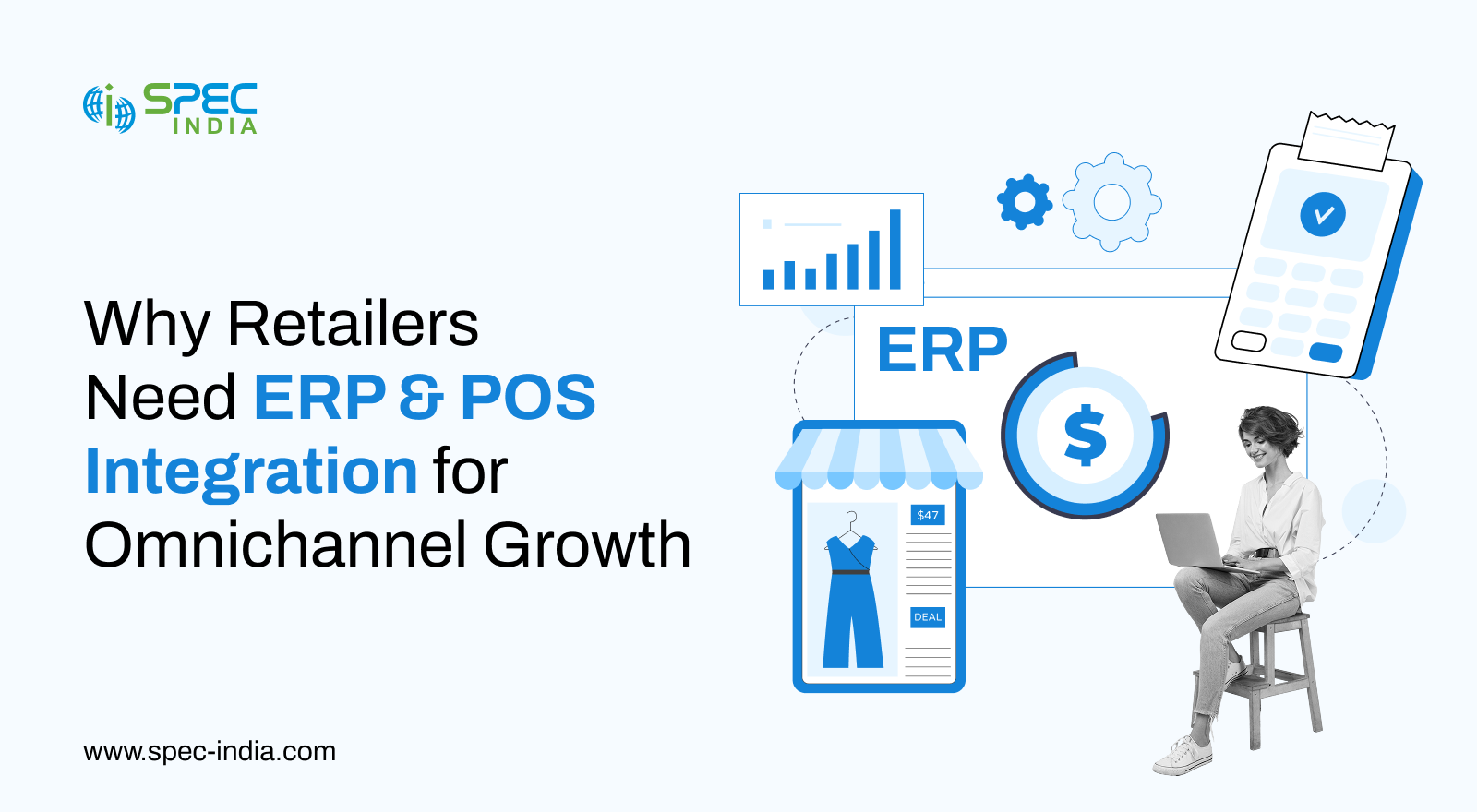
Retail is in the middle of a massive shake-up because shoppers no longer see a “line” between a physical store and a website. They want to browse on their phones, check local stock in real-time data feeds, and maybe buy in person, all while getting the same deals. For a business to keep up, multi-channel retail isn’t just a fancy option; it’s the standard.
The problem is that many shops are still running on “islands” of tech. The cash register handles the sale, but the office software handles the warehouse, and the two rarely speak the same language. This disconnect leads to “phantom inventory,” where a customer buys something online that sold out in the store an hour ago. It kills the customer experience and makes the staff’s life a nightmare.
This is where ERP and POS Integration save the day. By building a digital bridge between the front-end sales and the back-end office, you get a single source of truth. You can see your sales and stock levels across every location instantly. It turns a clunky, manual process into a streamlined engine for growth.
The Rise of Omnichannel Retail
The days of just having a shop on a corner are over. Customers are everywhere on Instagram, on Amazon, and on their mobile apps. To survive, a brand has to show up in all those places at once. This shift is why multi-channel retail has become the primary goal for any growing business.
-
Changing Consumer Expectations
People expect speed, and they expect you to know who they are. They might start a journey on their laptop and finish it at your counter. If your systems aren’t sharing info, you can’t give them that seamless feel. To keep them coming back, you need sales synchronization so that a return in-store reflects on their online account immediately.
-
Growth of Multi-Channel Retail Operations
When you sell through a website, an app, and three different stores, the paperwork can get overwhelming. You’re dealing with:
- Brick-and-mortar storefronts
- E-commerce hubs
- Social media shops
- Mobile apps
Without a “brain” to coordinate all of this, you end up with messy data and missed opportunities. This is exactly why retailers are moving toward unified platforms. It’s about creating an environment where retail automation does the heavy lifting, leaving the humans to focus on the customers.
-
Importance of Unified Retail Operations
Without integrated systems, managing multi-channel retail becomes difficult. Retailers may face inventory discrepancies, delayed reporting, and operational inefficiencies that negatively impact business performance.
This is why many organizations are investing in integrated retail technology platforms. By connecting operational systems and enabling real-time data sharing, retailers can create a unified operational environment that supports omnichannel growth.
What is ERP and POS Integration?
To get why ERP and POS Integration matters, you have to look at what these tools do when they’re left to their own devices.
-
Role of POS Systems in Retail
Your point-of-sale is where the action happens. It handles the money, the receipts, and the face-to-face interaction. Modern retail software at the register can do a lot, but if it isn’t connected to the rest of the company, that valuable data stays trapped at the front desk.
-
Role of ERP Systems in Retail Operations
The ERP is the “command center.” It tracks the big picture inventory management, paying vendors, and keeping the taxes straight. It’s the engine room of the business, but it’s only as good as the data you feed it.
-
How ERP and POS Integration Works
When you link the two, the “manual” part of the job disappears. A sale at the register instantly tells the warehouse to update the stock count. It’s a loop of real-time data that keeps everyone on the same page. This level of inventory management means you never over-promise or under-deliver, and it gives you the retail analytics you need to understand what’s selling and what’s sitting on the shelf.
Challenges of Operating Without ERP-POS Integration
Running a shop with disconnected systems is like trying to drive a car where the speedometer and the engine aren’t talking to each other. You’re moving, but you don’t really know how fast or how far you can go before things break down.
-
Inventory Inaccuracies Across Channels
When your register and your back office live in different worlds, updates usually happen manually or with massive lags. This is how you end up with “phantom stock.” Your website says you have three jackets left, but the store sold them two hours ago. This kind of broken inventory management leads to the one thing every shop hates: apologizing to a customer for a product you don’t have.
-
Delayed Business Insights
If your systems are split, you’re essentially flying blind. You can’t see real-time data on what’s moving. Instead of making quick calls based on today’s sales, you’re stuck waiting for end-of-week reports that are already ancient history. This lag kills the effectiveness of your retail analytics, leaving you a step behind the latest trends.
-
Poor Customer Experience
Shoppers today don’t care about your back-end tech; they just want their items. If you can’t see their full history because your systems are siloed, you can’t offer them the personalized service they expect. Missing out on these integrated insights ruins the customer experience, making your loyalty programs feel generic and out of touch.
Key Benefits of ERP and POS Integration for Retailers
Linking your front-end sales to your back-end “brain” changes everything. It turns a manual, error-prone mess into a streamlined retail automation engine that keeps everyone on the same page.
-
Real-Time Inventory Management
This is the biggest win. When a sale happens at the counter, the warehouse knows instantly. This level of inventory management means:
- You know exactly what’s on the shelf across every single location.
- You stop the nightmare of overselling products online.
- Your reordering process becomes a science rather than a guessing game.
- Customers always see the right availability, no matter where they shop.
-
Automated Sales Synchronization
No one wants to spend their evening typing sales figures into a spreadsheet. With an integrated setup, sales synchronization happens by itself. The second a customer pays, the financial records and stock levels update everywhere. This cuts out human error and frees up your team to help people instead of doing paperwork.
-
Improved Customer Experience
When you have a full view of a customer’s habits, you can stop treating them like a stranger. You can see what they like, what they’ve bought before, and what they might want next. This isn’t just “good service,” it’s a way to use CRM in retail to build actual loyalty. You get faster checkouts, accurate stock info, and a multi-channel retail feel that works perfectly every time.
-
Retail Analytics and Data-Driven Insights
When all your data lives in one home, you can finally see the big picture. By combining your sales, stock, and money records, you gain a massive competitive edge. You can use business intelligence in retail to spot which products are your “stars” and which ones are just taking up space, allowing you to make smarter calls on pricing and promotions.
Role of Data and Analytics in Modern Retail
In today’s market, the “gut feeling” is being replaced by cold, hard facts. If you aren’t using your data, you’re leaving money on the table.
-
Leveraging Retail Analytics for Decision Making
Smart managers use retail analytics to keep a pulse on the business. It’s about knowing which promotions brought people in and which locations are falling behind. This data lets you fix supply chain issues or marketing plans before they become expensive problems.
-
Data Science Applications in Retail
For the bigger players, data science retail takes things even further. We’re talking about using math to predict the future, forecasting exactly how much stock you’ll need for a holiday rush, or figuring out the perfect price point using predictive models. It’s the ultimate way to stay proactive instead of just reacting to what happened yesterday.
-
Business Intelligence for Retail Performance
Modern business intelligence in retail gives you a dashboard that makes sense. Executives can look at a screen and see exactly how the whole company is performing in real time. By pulling together your ERP data and your POS transactions, you get a “command center” view of the business that is accurate, honest, and ready for action.
ERP-POS Integration and Retail Automation
One of the biggest wins when you link your office “brain” to your cash registers is that everything starts to run itself. It’s about taking the busywork out of the day-to-day grind.
-
Automating Inventory and Order Management
With retail automation, the system takes over the clipboard work. The second a customer buys a pair of boots, whether that’s in-store or at 2 AM on your website, the stock levels just update. This can even trigger a reorder from your supplier before you even realize you’re running low. It cuts out the human error of manual counting and makes sure your “in stock” badge is telling the truth across every shelf and screen.
-
Streamlining Store and Online Sales Operations
If you’re selling in person and online at the same time, things can get messy fast. Keeping your prices and products consistent everywhere is a full-time job without help. Integrated systems act as the “single source of truth,” making multi-channel retail feel like one smooth operation rather than a dozen separate fires to put out.
-
Enhancing Operational Efficiency Through Automation
The real goal of automation is to get your staff away from the spreadsheets and back in front of the customers. By letting the tech handle the inventory pings and the financial tallying, your team can focus on the customer experience and the big-picture planning that grows the brand.
Build vs Buy: Choosing the Right Integration Approach
When it’s time to pull the trigger on ERP and POS Integration, every retailer hits a fork in the road. Should you buy something ready-made or build a custom bridge? This build vs buy choice usually comes down to how “weird” your business processes are and how much you plan to grow.
-
Off-the-Shelf Retail Integration Platforms
A lot of businesses go for the ready-made route. These platforms use pre-built “plugs” to connect common systems.
- The Pros: You can get up and running fast, the upfront cost is lower, and the features are tried and tested.
- The Catch: You might hit a wall if you need a very specific, unique way to handle your data.
-
Custom ERP and POS Integration Solutions
For bigger players or those with a very specific way of working, building from scratch is the way to go. It lets you design a system that fits your specific workflow like a glove.
- The Perks: Total control, massive scalability, and the ability to hook in as many different enterprise systems as you want.
- The Long Game: For a complex multi-channel retail setup, a custom build ensures your tech grows with you, not against you.
Choosing the Right Technology Partner for Retail Integration
You can’t just “set and forget” these systems. You need a team that understands how the gears of a retail business turn.
-
Expertise in Retail System Integration
Your tech stack is likely a mix of registers, warehouses, and CRM in retail tools. Making them all play nice requires more than just a developer; it requires an architect. You need partners who have seen the “under the hood” mess of retail software and know how to clean it up into something scalable.
-
Custom Retail Software Development
If your business doesn’t fit into a standard box, you need retail software development services that can build something unique. Whether it’s a specialized loyalty program or a high-end business intelligence in a retail dashboard, a custom framework lets you manage the chaos of a growing company while staying fast on your feet.
-
Supporting Retail Digital Transformation
As the market moves toward deep data and instant service, these integrated systems aren’t just a “nice to have,” they are the foundation. Expert partners like SPEC India help bridge that gap, providing the technical muscle for retail automation and unified data. With the right help, you can turn your “islands of data” into a single, high-speed engine that makes the whole company smarter and more efficient.
Future of Retail Technology Integration
The world of retail tech is moving fast, and the tools we use to talk to customers and run our back offices are getting a lot smarter. It’s no longer about just having a digital presence; it’s about having a digital brain that runs the whole show.
-
AI and Predictive Retail Analytics
We’re seeing a massive shift where artificial intelligence is doing the heavy lifting, predicting what people want before they even buy it. By feeding your ERP and POS Integration data into these smart systems, you can forecast demand and get your pricing exactly right. This is where data science retail stops being a buzzword and starts being the engine that helps you stay two steps ahead of the competition.
-
Cloud-Based Retail Platforms
The cloud is the only way to stay flexible. Most growing shops are moving their retail software to the cloud because it lets them add new sales channels without having to buy a whole new set of servers. It’s the ultimate “safety net” for a business that plans to get bigger.
-
Unified Commerce Ecosystems
The end goal for any modern brand is a “unified” setup. This means your ERP, your registers, your CRM in retail, and your data tools are all sharing the same real-time data in one big loop. It ensures that every time a customer touches your brand online or in person, they get the same high-end, personalized experience.
Conclusion
Trying to run a modern business with disconnected systems is a losing battle. When your website doesn’t know what your store is doing, you’re looking at messy books, wrong stock counts, and frustrated shoppers. Coordinating your inventory and money across ten different platforms just isn’t sustainable anymore.
This is exactly why ERP and POS Integration has moved from a “nice-to-have” to a total necessity. Linking your front-end sales to your back-end office gives you a single, honest view of your whole company. It lets you make fast calls based on what’s happening right now, not what happened last week.
When your systems talk to each other, the manual “busy work” disappears. You get better inventory management, smoother checkouts, and a customer experience that feels premium across every channel. Plus, you finally have the clean data you need to use business intelligence in retail to spot trends and plan your next big move.
For any brand serious about multi-channel retail growth, this integration is the foundation. It’s the only way to stay efficient, keep your customers happy, and build a competitive edge that lasts.
Frequently Asked Questions
It’s basically building a digital bridge between your cash registers and your main office software. This lets your sales, stock levels, and financial records update themselves automatically.
It makes sure that your online store and your physical shop are always on the same page. Without it, you’ll struggle with wrong stock counts and inconsistent prices across different sites.
The second a customer buys something, the system tells the warehouse and the website to update the count. This stops you from accidentally selling the same item twice.
That build vs buy choice depends on your specific needs. If you have a unique way of working, a custom build is better. If you want something fast and standard, an off-the-shelf platform is usually the way to go.
You need a mix of good retail software, a solid ERP, and a "connector" that lets them share data. Toss in some analytics and CRM tools, and you have a full engine for running your business automatically.

SPEC INDIA is your trusted partner for AI-driven software solutions, with proven expertise in digital transformation and innovative technology services. We deliver secure, reliable, and high-quality IT solutions to clients worldwide. As an ISO/IEC 27001:2022 certified company, we follow the highest standards for data security and quality. Our team applies proven project management methods, flexible engagement models, and modern infrastructure to deliver outstanding results. With skilled professionals and years of experience, we turn ideas into impactful solutions that drive business growth.
Table of contents
- The Rise of Omnichannel Retail
- What is ERP and POS Integration?
- Challenges of Operating Without ERP-POS Integration
- Key Benefits of ERP and POS Integration for Retailers
- Role of Data and Analytics in Modern Retail
- ERP-POS Integration and Retail Automation
- Build vs Buy: Choosing the Right Integration Approach
- Choosing the Right Technology Partner for Retail Integration
- Future of Retail Technology Integration
- Conclusion
Delivering Digital Outcomes To Accelerate Growth
Let’s TalkTable of contents
- The Rise of Omnichannel Retail
- What is ERP and POS Integration?
- Challenges of Operating Without ERP-POS Integration
- Key Benefits of ERP and POS Integration for Retailers
- Role of Data and Analytics in Modern Retail
- ERP-POS Integration and Retail Automation
- Build vs Buy: Choosing the Right Integration Approach
- Choosing the Right Technology Partner for Retail Integration
- Future of Retail Technology Integration
- Conclusion
Delivering Digital Outcomes To Accelerate Growth
Let’s TalkRelated Blogs
Let’s get in touch!
India
SPEC House, Parth Complex, Near Swastik Cross Roads, Navarangpura, Ahmedabad 380009, INDIA.
-
 +91-79-26404031, 32-33-34
 -
 [email protected]