| App Type | Description | Target Audience | Example Features |
|---|---|---|---|
| Workout & Training Apps | Provide structured workout plans, video guides, and customized workout plans for home or gym use. | Beginners, intermediate gym-goe | Exercise libraries, video demos, custom routines, progress tracking |
| Activity Tracking Apps | Monitor daily movement, steps, calories burned, and overall physical activity through sensors and wearables. | Busy professionals, casual exercisers | Step counter, GPS tracking, activity tracking, calorie burn |
| Nutrition & Diet Apps | Help users log meals, track macros, and create personalized meal plans tailored to fitness goals. | Weight-watchers, bodybuilders, health-conscious users | Food diary, barcode scanner, personalized meal plans, macro tracking |
| Yoga and Meditation Apps | Guide users through yoga sessions, breathwork, and mindfulness practices to support mental and physical wellness, often including holistic wellness support such as nutrition, hydration, and sleep monitoring. | Stress-prone professionals, wellness seekers | Guided sessions, breathing exercises, sleep tracking, and mood logs |
| Personal Trainer Apps | Connect users with virtual personal trainers for personalized coaching, tailored workout plans, and real-time guidance, replicating one-on-one coaching experiences. | Users seeking premium coaching | Video consultations, customized workout plans, and real-time feedback |
| Fitness Tracker App | Dedicated fitness tracker app development focused on health monitoring via wearables and smart devices. | Tech-savvy health enthusiasts | Heart rate, sleep, hydration, and VO2 max tracking |
| Corporate Wellness Apps | Designed for organizations to manage employee health programs, challenges, and wellness incentives. | Enterprises, HR teams | Team challenges, wellness score, leaderboards, health reports |


Loading...
Fitness App Development: Cost, Features & Step-by-Step Guide (2026)
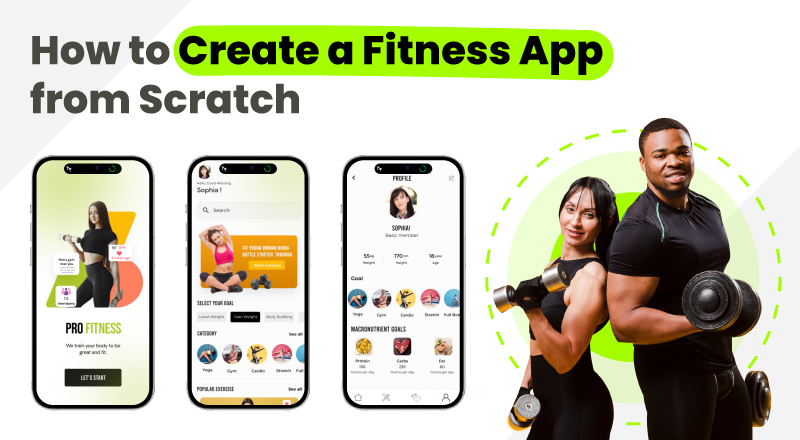
The health and fitness app space looks nothing like it did five years ago. Over 1.1 billion smartphone users now track some aspect of their health digitally, and the money flowing into this space reflects that shift. The global fitness app market stood at around $12.12 billion in 2025 and is expected to reach USD 33.58 billion by 2033, with a steady 13.4% annual growth rate that’s hard to ignore.
What’s driving this? Partly it’s AI. Personalized workout recommendations, adaptive nutrition guidance, and health insights that actually respond to how someone lives their life — these aren’t novelties anymore. Users have come to expect them. If your app still pushes the same cookie-cutter three-day split to every person who signs up, you’re already behind.
The stakes are higher for anyone building in this space today. Investors aren’t easily impressed by a clean UI and a step counter. What they want to see is genuine personalization, intelligent use of health data, wearable device integration, and security practices solid enough to handle sensitive biometric and health information responsibly. That means GDPR compliance if you’re touching EU users, HIPAA alignment if you’re dealing with health data in the US, and PCI DSS for anything involving payments. These aren’t optional checkboxes — they’re table stakes.
Whether you’re an entrepreneur with a specific gap in the market you want to fill, a brand exploring a branded personal trainer experience, or a company building a wellness platform for your team, the fundamentals are the same. You need a clear concept, grounded research, the right technical foundation, and a monetization approach that makes sense for your audience. This guide walks through all of it.
Types of Fitness Apps
One of the most common mistakes in fitness app development is jumping into features before understanding which type of app you’re actually building. The category matters a lot. A meditation and mindfulness app for corporate burnout has completely different technical requirements, design priorities, and user expectations than a marathon training tracker or a gym-based strength program.
Innovative fitness apps now offer comprehensive tracking that links mental wellness, nutrition, and exercise into one platform, supporting a holistic lifestyle and enhancing the user’s fitness journey through integrated goal setting, progress analytics, and milestone rewards.
How to Choose Your Fitness App Type and Target Market
Today’s more ambitious fitness apps have started blurring these category lines. Some platforms now tie together mental health tracking, nutrition logging, and physical exercise in a single experience, letting users see how their sleep affects their training, or how their stress levels correlate with their eating patterns. That kind of integrated view is appealing to users who are thinking about their health holistically rather than in silos.
But before you chase that vision, get clear on where your app fits and who it’s for, as every successful plan begins with a well-defined target audience and purpose.
-
Start with the problem, not the product.
The apps that stick around are the ones that solve something specific. Are people abandoning their workout routines because they don’t know how to progress? Are they frustrated by nutrition apps that don’t talk to their fitness tracker? Are gym-goers intimidated by strength programming and just need clearer guidance? The more precisely you can name the frustration, the more focused your product becomes.
-
Know exactly who you’re building for
A yoga app designed for senior users has different needs than one aimed at competitive athletes doing yoga for mobility work. Think seriously about who your user is — their age, their fitness level, how comfortable they are with technology, how much time they realistically have, and what success looks like for them. These details should shape every feature decision you make.
-
Do the market research properly.
It’s tempting to assume you know the competitive landscape, but assumptions at this stage are expensive. Download the leading apps in your category. Read the reviews — especially the negative ones, because that’s where unmet needs live. Look at pricing models and see what users are actually willing to pay for. This kind of research isn’t glamorous, but it consistently saves teams from building things nobody asked for.
-
Figure out your monetization approach early
Premium personal training apps can support higher price points because the perceived value is high and the audience is motivated. General activity tracking apps often rely on volume, advertising, or freemium upsells. These are fundamentally different businesses that require different product strategies. Knowing which one you’re building from the start means you’re not redesigning your pricing model after launch.
-
Be realistic about the competition
If you’re entering a crowded space — general workout logging, for instance — your app needs a real differentiator, not just a cleaner design. On the other hand, more specific categories (corporate wellness, apps for specific health conditions, training tools for niche sports) can sometimes gain traction faster because the competition is thinner and the audience is more defined.
Must-Have Features for a Successful Fitness App
A user-friendly interface isn’t just nice to have — it directly affects whether people stick around past the first week. Fitness apps are used in demanding conditions: mid-workout, out of breath, with sweaty fingers on a phone screen. If someone has to think too hard to log a set or find their next exercise, they’ll stop using the app.
For any fitness app launching today, there are features that need to be present from the start, and features that can come later once you’ve validated the core experience.
| Features | Description | User Benefit | Level |
|---|---|---|---|
| User Authentication | Secure login via email, social accounts, or biometrics with secure data storage protocols. | Protects sensitive user data and account privacy | Basic |
| User Profile & Goal Setting | Allows users to set fitness goals, input health metrics, and receive tailored recommendations. | Enables personalized fitness journeys | Basic |
| Activity Tracking | Tracks workouts, steps, calories, and distance in real-time using device sensors. | Keeps users engaged with daily progress visibility | Basic |
| Push Notifications | Sends reminders, motivational prompts, and update alerts to keep users engaged consistently. Notifications and reminders encourage workout consistency and celebrate achievements, significantly boosting user engagement. | Reduces drop-off and keeps users engaged | Basic |
| Workout Library | A searchable database of exercises with video demonstrations and step-by-step instructions. | Empowers users to train correctly and safely | Basic |
| Customized Workout Plans | Nutrition module with meal tracking, macro goals, and personalized meal plans based on dietary preferences. | Supports holistic health beyond exercise | Basic |
| Progress Dashboard | Visual charts and milestones tracking users’ weekly and monthly fitness achievements. Progress tracking and analytics help users visualize improvement through metrics like weight changes, calorie burn, and workout completion rates, which can drive long-term subscription retention. | Motivates continued engagement | Advanced |
| Wearable Integration | Syncs with fitness trackers and smartwatches for seamless data from tracking apps. | Enriches data accuracy across fitness tracking apps | Advanced |
| AI & ML Personalization | Advanced features powered by machine learning and data analytics to adapt workout and nutrition plans dynamically, enhancing personalized training plans and recommendations. | Delivers ever-improving, adaptive coaching | Basic |
| Social & Community Features | Friend lists, group challenges, and leaderboards to foster a fitness community and increase user engagement. | Adds accountability and fun | Advanced |
| Live & On-Demand Classes | Streaming video workouts led by professional trainers in real time or on-demand. | Gym-quality coaching from anywhere | Advanced |
| Secure Data Storage | End-to-end encryption and compliance-grade secure data storage for all sensitive user data. | Builds trust and regulatory compliance | Advanced |
| In-App Chat / Coach Access | Direct messaging with human or AI coaches for guidance and accountability. Often included as part of premium features to increase user engagement and retention. | Premium support for serious users | Advanced |
Creating Effective Personalized Workout Plans and Fitness Tracking
Generic workout plans don’t cut it anymore. Users can find a basic three-day-a-week program with a five-second Google search. What keeps them in your app is a plan that feels like it was built for them — one that accounts for their current fitness level, their available equipment, their schedule, and their actual goals.
The best time to collect this information is during onboarding. When someone first opens the app, ask the right questions: What are they training for? How many days a week can they realistically commit? What equipment do they have access to? Are there any injuries or limitations to work around? With this data, you can generate Personalized Workout Plans that blend cardio, strength, and flexibility work in proportions that make sense for that specific person rather than just serving up a template.
Nutrition is worth integrating if your roadmap allows for it. Exercise and eating are deeply connected for most users, and a workout app that helps someone understand how their food choices affect their energy and recovery delivers noticeably more value than one that treats workouts in isolation.
Progress tracking needs the same level of care as plan creation. Dashboards should be clear and motivating without being overwhelming. Users should be able to see where they started, where they are now, and what they’re working toward. Milestone badges and personal records give people small wins to celebrate along the way, which matters more than most product teams.
How to Develop a Fitness App: A Step-by-Step Process
The fitness app development process involves much more than code writing, and a carefully thought-out, strategic plan that integrates user-focused design, scalable technology, and continuous development. A professional fitness application development company follows this structured approach to ensure high-quality outcomes. To create a fitness app, you should follow a structured mobile application development strategy that accounts for technical and user experience factors, which are essential for successful fitness app development. The success of an app development process requires an organized approach to the whole process, where every step, such as planning and design, development, and post-launch support, is implemented successfully.
To build a custom fitness app, it should provide value as a personalized experience, consistent performance, and interactive features to motivate users to continue their wellness journey. This is the reason why professionally developed fitness app teams adhere to a rigorous end-to-end process that reduces risks, maximizes the time spent on development, maximizes user satisfaction, and obtains user feedback during the development process to make improvements.
The following step-by-step method has been tested with industry experts to develop high-performing fitness applications:
-
Determine your concept and your point of view
What is it that your app is doing that the current options are not doing? Before any development is undertaken, there should be a clear, truthful answer to this question.
-
Explore the fitness app market
Confirm that there is an actual need for your idea. Competitors do not copy; they study to get an idea of their weaknesses.
-
Deliberately scope your features
Choose what will be in your MVP and what will be added to it. The first release should include user authentication, core tracking, notifications, and personalized plans. After the foundation is laid, AI personalizations and higher wearable integrations can be pursued.
-
Design before you build
Wireframe the key user flows before writing a line of code. Someone logging a workout mid-session shouldn’t have to navigate through three screens to record a set. Friction at these moments is where apps lose people.
-
Select your technology stack
Native development (Swift on iOS, Kotlin on Android) provides optimum performance and platform capabilities. Cross platform development such as Flutter or React Native can help you reach the market quicker and keep down the expense of supporting different codebases. They are both viable options based on your priorities and schedule.
-
Build a fitness app iteratively
Ship features, get user feedback early, and adjust. Groups that do not test until the product is finished are likely to find out the underlying issues way too late.
-
Integrate wearables and third-party services early
Wearable APIs, such as Apple HealthKit, Google Fit, and other technical tricky ones, can be tricky. It is an error to leave such integrations towards the end of development. Construct them earlier in order to have time to deal with the edge cases.
-
Take security seriously from day one
Fitness apps collect genuinely sensitive information — health history, biometrics, location data. Encryption, secure authentication, and privacy compliance aren’t features you add later; they’re architectural decisions made at the start.
-
Test on real devices
Emulators miss things that real devices catch, especially under conditions like motion, low connectivity, and extended screen-on time during a workout session.
-
Launch with analytics in place
You should be able to see in real time the flow of users in the app, their points of drop off, and what features are being utilized. This information defines all that follows launch, and work does not stop there. The difference between apps that grow and apps that stall is post-launch updates, user feedback cycles, and continuous performance improvements.
Choosing the Right Technology Stack for Your Fitness App
A fitness mobile app development strategy should be planned carefully, with the right tech stack choices selected to ensure stability, security, and seamless integration of advanced functionalities, along with long-term scalability. Collaborating with a firm specializing in developing fitness apps may assist you in selecting the appropriate technical architecture to use, ensuring compliance, and providing a user-friendly and rich with features experience. One of the most significant choices in the development of fitness apps is the technology stack.
The right stack has made your app scalable, secure, and able to provide core features as the user demand increases. The following is a detailed breakdown that experienced fitness app development teams employ to create a fitness app project:
| Layer (Frontend/Backend/etc.) | Technologies | Use Case |
|---|---|---|
| Frontend (iOS) | Swift, SwiftUI, Objective-C | Native iOS apps for leading fitness apps on Apple platforms |
| Frontend (Android) | Kotlin, Java, Jetpack Compose | Native Android fitness tracking apps with smooth UX |
| Cross-Platform | React Native, Flutter | Cost-efficient fitness app projects targeting both iOS & Android |
| Backend | Node.js, Python (Django/FastAPI), Ruby on Rails | API development, business logic for robust fitness app architecture |
| Database | PostgreSQL, MySQL, MongoDB, Firebase | Structured user data, workout logs, and secure data storage |
| Cloud Infrastructure | AWS, Google Cloud, Microsoft Azure | Scalable hosting for the fitness app development market demands |
| AI / ML | Firebase, WebSockets, Twilio, OneSignal | Push notifications, live class streaming, and real-time sync |
| Wearable Integration | Apple HealthKit, Google Fit, Fitbit API, Garmin SDK | Syncing data from tracking apps and wearable devices |
| Security & Compliance | OAuth 2.0, JWT, SSL/TLS, HIPAA-compliant storage | Protecting sensitive user data and enabling user authentication |
| Analytics | Mixpanel, Firebase Analytics, Amplitude | Tracking user behavior and optimizing fitness app projects |
React Native or Flutter is the most reasonable combination of cost, performance, and cross-platform coverage to launch a fitness app in the initial stages of development. When the app grows in the fitness app development market, teams tend to add native functionality to support performance-sensitive applications such as real-time activity tracking or form analysis through the camera.
How Much Does it Cost to Develop a Fitness App?
Fitness app development cost isn’t just about features—it’s about how deeply you want to engage users and scale your product.
In our experience working with startups and enterprises, the cost to build a fitness app typically ranges from $20,000 to $150,000+, depending on the level of sophistication and personalization required.
For example:
- A simple workout tracking app can be built quickly with limited investment
- But an AI-powered fitness platform with wearable integrations requires significantly more time, expertise, and budget
Another important factor is your long-term vision. Many businesses start with a basic version (MVP) and gradually evolve into a more advanced solution based on user feedback and market demand.
To simplify this, we’ve categorized fitness apps into three levels based on real-world development scenarios:
- Basic Apps – Focused on core functionality and quick launch
- Intermediate Apps – Designed for better user engagement and retention
- Advanced Apps – Built for scalability, personalization, and innovation
Below is a practical cost breakdown by category, along with the features you can expect at each level.
| App Type | Estimated Cost | Key Features | Best For |
|---|---|---|---|
| Basic Fitness App | $20,000 – $50,000 | Workout tracking, Exercise guides, and Basic user profiles | Startups or MVPs looking to enter the market quickly |
| Intermediate Fitness App | $50,000 – $80,000 | Personalized workout plans, Nutrition tracking, and Social media integration | Businesses aiming to offer enhanced user engagement |
| Advanced Fitness App | $80,000 – $150,000+ | AI-driven personalization, Wearable device integration, and AR-based workouts | Enterprises building feature-rich, scalable fitness platforms |
Fitness Application Development Monetization Strategies
A compelling health and fitness app needs a sustainable revenue model to ensure long-term growth and continuous improvement. Choosing the right monetization strategy not only drives revenue but also enhances user experience when implemented thoughtfully. Here are the most effective strategies used by leading fitness apps :
-
Freemium Model
Provide basic features at no cost, and behind a paid subscription, offer advanced fitness app features, like AI coaching, unlimited customized workout plans, and personalized meal plans. This model is the most prevalent among the most popular fitness apps because it maximizes the number of users and transforms serious users into subscribers.
-
Subscription Tiers
Monthly and annual subscriptions provide predictable recurring revenue. Offer tiered plans: a basic plan for casual users and a premium plan unlocking all advanced features. Annual billing discounts improve retention and reduce churn significantly for fitness app development market players.
-
In-App Purchases
Sell individual programs, challenge packs, premium workout plans, or nutrition guides as one-time purchases. This works well for fitness tracking apps with a highly engaged community willing to pay for specific content.
-
Personal Trainer App Revenue
Personal trainer app development opens a high-value revenue stream: charging a commission or platform fee when certified trainers offer paid sessions, custom plans, or video consultations through the app. This model commands premium pricing from motivated fitness users.
-
Corporate Wellness Licensing
Sell your fitness app to enterprises as an employee wellness benefit. Corporations pay per-seat or flat licensing fees, making this among the highest-value monetization models for health and fitness app developers with scalable infrastructure.
-
Wearable and Hardware Partnerships
Partner with wearable brands — smartwatch manufacturers, fitness tracker companies — to bundle app subscriptions with hardware purchases. This expands your user base through hardware distribution channels.
-
Affiliate and Sponsorship Revenue
Integrate curated product recommendations — supplements, gear, equipment — within the app experience via affiliate marketing. Yoga and meditation apps frequently leverage wellness brand sponsorships for additional non-subscription revenue.
Conclusion
The fitness app market in 2026 rewards those who combine a sharp fitness app idea with disciplined execution. The most successful health and fitness app products are not built on features alone; they are built on thorough market research, deeply personalized experiences, secure handling of sensitive user data, and a monetization model that aligns with user behavior.
Whether you are building a yoga and meditation app, fitness tracking apps, or a full-scale personal trainer app development platform, the fundamentals remain constant: start with essential features, invest in advanced fitness app features strategically, keep users engaged with push notifications and new features, and protect every piece of sensitive user data with secure data storage and proper user authentication.
SPEC India has been powering fitness app projects for organizations of all sizes for over 36 years. Our fitness app development teams have deep expertise in delivering fitness app solutions — from MVP to enterprise-scale — across every major technology stack. We understand what it takes to compete among leading fitness apps and help your idea become a market-ready reality through expert fitness mobile app development.
Ready to build a fitness app? We are one of the leading Fitness App development companies serving in the market for more than 39+ years. Let’s turn your vision into something real with your own fitness app.
Frequently Asked Questions
Fitness apps rely on algorithms and sensor data, which means the numbers you see—like calories burned or steps taken—are best treated as directional insights rather than exact values. They are great for tracking trends and progress, but not precise enough for medical or highly specific fitness decisions.
Yes, most apps are designed to integrate with popular wearables, but the experience can vary. Syncing depends on permissions, device compatibility, and how well the app is optimized. While it usually works smoothly, occasional delays or mismatches in data can still happen.
Fitness apps are built to be flexible, so they typically adjust your schedule when you return. However, they can’t fully account for lost progress or reduced fitness levels unless you update your status manually. In short, the app adapts—but it still depends on your honesty and consistency.
AI in fitness apps is useful for analyzing patterns and making suggestions, such as adjusting workout intensity or recommending rest days. However, it’s not advanced enough to fully replicate human coaching. Think of it as a smart assistant rather than an expert trainer.
Yes, short workouts can be effective if performed consistently and with enough intensity. The key is not duration alone, but how well the workout fits into your routine and whether you stick to it over time.

SPEC INDIA is your trusted partner for AI-driven software solutions, with proven expertise in digital transformation and innovative technology services. We deliver secure, reliable, and high-quality IT solutions to clients worldwide. As an ISO/IEC 27001:2022 certified company, we follow the highest standards for data security and quality. Our team applies proven project management methods, flexible engagement models, and modern infrastructure to deliver outstanding results. With skilled professionals and years of experience, we turn ideas into impactful solutions that drive business growth.
Table of contents
- Types of Fitness Apps
- How to Choose Your Fitness App Type and Target Market
- Must-Have Features for a Successful Fitness App
- Creating Effective Personalized Workout Plans and Fitness Tracking
- How to Develop a Fitness App: A Step-by-Step Process
- Choosing the Right Technology Stack for Your Fitness App
- How Much Does it Cost to Develop a Fitness App?
- Fitness Application Development Monetization Strategies
- Conclusion
Delivering Digital Outcomes To Accelerate Growth
Let’s TalkTable of contents
- Types of Fitness Apps
- How to Choose Your Fitness App Type and Target Market
- Must-Have Features for a Successful Fitness App
- Creating Effective Personalized Workout Plans and Fitness Tracking
- How to Develop a Fitness App: A Step-by-Step Process
- Choosing the Right Technology Stack for Your Fitness App
- How Much Does it Cost to Develop a Fitness App?
- Fitness Application Development Monetization Strategies
- Conclusion
Delivering Digital Outcomes To Accelerate Growth
Let’s Talk



Let’s get in touch!
India
SPEC House, Parth Complex, Near Swastik Cross Roads, Navarangpura, Ahmedabad 380009, INDIA.
-
 +91-79-26404031, 32-33-34
 -
 [email protected]