| Challenge | Business Impact | Route Optimization Approach |
|---|---|---|
| High fuel costs | Rising transportation expenses | Shorter, data-driven routes |
| Delivery delays | Missed delivery windows | Dynamic rerouting |
| Empty miles | Wasted fuel and driver time | Return-load and backhaul planning |
| Poor fleet utilization | Uneven vehicle workloads | Balanced dispatch |
| Manual planning | Slow and error-prone scheduling | Automated route planning |
| Limited visibility | Delayed response to disruptions | Real-time vehicle tracking |


Loading...
Logistics Route Optimization: How Custom Solutions Improve Fleet Efficiency
Posted
August 21, 2026
Category Logistics & Freight
Keeping deliveries on schedule is becoming more challenging for logistics businesses. Fluctuating fuel prices, tight delivery windows, growing delivery volumes, and rising customer expectations all put pressure on fleet operations. As fleets and delivery networks expand, manual route planning can become difficult to manage.
Inefficient routes can result in unnecessary mileage, higher fuel consumption, underused vehicles, and delayed deliveries. A more structured approach to routing can help businesses address these challenges while improving visibility and fleet utilization.
Logistics route optimization uses data, software, and algorithms to identify more efficient routes while considering factors such as traffic, vehicle capacity, delivery windows, and fleet availability. As logistics networks become more complex, route optimization helps businesses respond faster and build more efficient transportation operations.
According to Fortune Business Insights, the global vehicle route optimization software market was valued at USD 15.31 billion in 2025 and is projected to reach USD 44.20 billion by 2034.
Let’s explore how route optimization works, what capabilities businesses should consider, and when a custom solution may be a better fit.
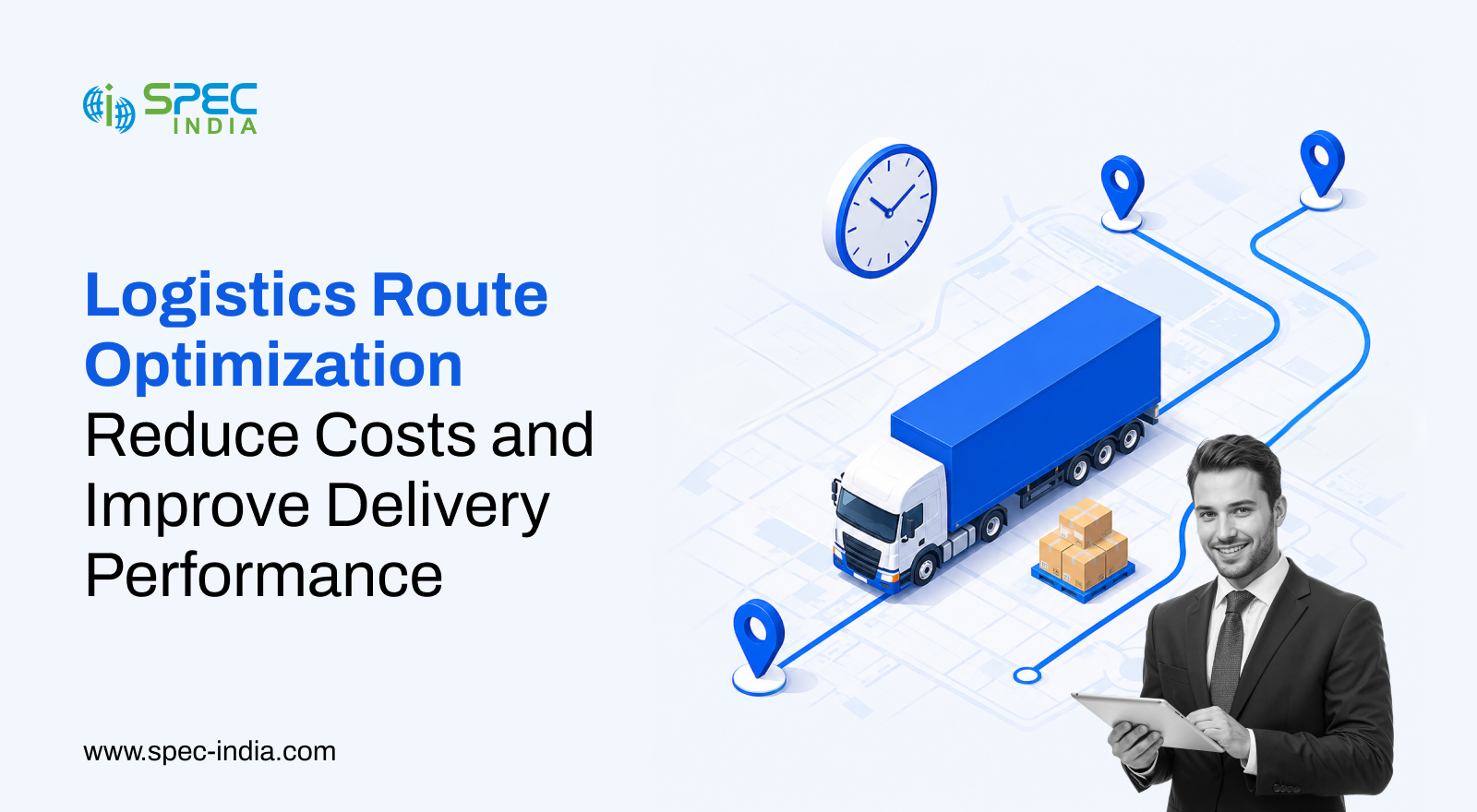
What is Logistics Route Optimization?
Logistics route optimization is the process of using software, data, and algorithms to determine efficient delivery routes while considering operational constraints.
Unlike basic route planning, which may generate a fixed path from one location to another, an optimized routing system can account for real-world conditions such as:
- Traffic and road conditions
- Vehicle capacity
- Driver availability
- Delivery priorities
- Delivery time windows
- Multiple depots
- Last-minute orders
- Weather and unexpected disruptions
Route Planning vs. Route Optimization
Basic route planning typically creates a route based on a predefined set of locations. Once the route is created, changes may need to be handled manually.
Route optimization takes a more dynamic approach. It can use real-time information to adjust routes when traffic conditions, delivery priorities, or operational requirements change.
This allows logistics teams to move from static planning toward more responsive fleet management.
For businesses with unique fleet structures or delivery rules, a custom solution can provide additional flexibility by adapting routing logic to existing workflows and operational requirements.
Business Value of Route Optimization
Effective route optimization can help logistics businesses:
- Reduce unnecessary transportation costs
- Improve fleet utilization
- Reduce empty miles
- Improve delivery consistency
- Simplify dispatch operations
- Increase visibility across delivery networks
Common Logistics Challenges Solved by Route Optimization
As logistics operations grow, several challenges become increasingly difficult to manage manually. Route optimization can help address many of these operational issues.
1. High Fuel Costs
Fuel is one of the major operating expenses for fleet-based businesses. Inefficient routes, unnecessary detours, and excessive idling can increase fuel consumption.
Optimized routing helps identify more efficient paths and reduce unnecessary travel.
2. Delivery Delays
Traffic, weather, unexpected road conditions, and last-minute orders can affect delivery schedules.
Dynamic route optimization can respond to changing conditions and help dispatchers adjust routes when disruptions occur.
3. Empty Return Trips
Vehicles returning without additional loads represent wasted fuel, time, and capacity.
Routing systems can identify opportunities for return loads and improve vehicle utilization throughout their journeys.
4. Poor Fleet Utilization
Some vehicles may remain underused while others carry heavier workloads.
Fleet route optimization can help distribute deliveries more effectively based on vehicle availability, capacity, location, and delivery requirements.
5. Manual Route Planning
Spreadsheets and manual planning processes can take significant time, particularly when delivery volumes and fleet sizes increase.
Automated routing can evaluate multiple variables and generate optimized routes much faster than manual planning.
6. Limited Shipment Visibility
Without connected tracking and routing information, dispatch teams may have limited visibility into vehicle locations and delivery progress.
GPS tracking and integrated logistics systems provide real-time visibility and help teams respond faster when delays occur.
As logistics operations become more complex, businesses may need routing capabilities that fit their fleet structure, delivery network, and existing workflows rather than relying entirely on generic tools.
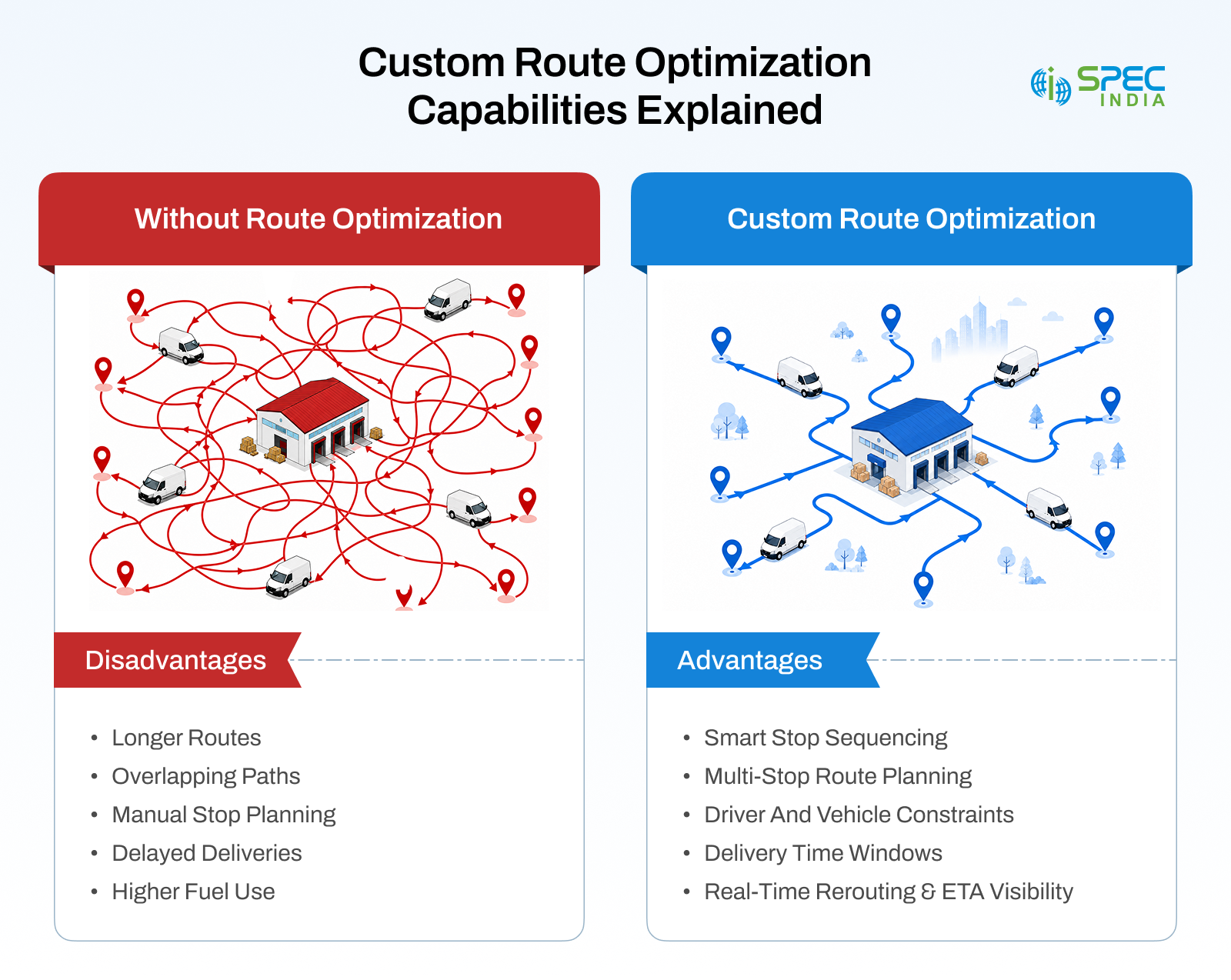
Key Capabilities of a Custom Route Optimization Solution
A standard routing platform may address common requirements, but businesses with specialized workflows often need greater flexibility.
A custom route optimization solution can be designed around specific fleet structures, delivery rules, business systems, and operational processes.
Here are some capabilities to consider.
1. AI-Powered Route Optimization
AI and machine learning can analyze historical delivery data, traffic patterns, and operational information to support better routing decisions.
A system can use previous route performance to identify patterns and improve future planning.
Key capabilities may include:
- Learning from completed routes
- Considering changing traffic conditions
- Supporting data-driven routing decisions
- Identifying recurring route inefficiencies
2. Multi-Stop and Multi-Depot Optimization
Businesses operating across multiple locations may need to coordinate deliveries from several depots.
Multi-stop and multi-depot optimization can help determine efficient delivery sequences while balancing workloads across locations.
This can help:
- Reduce unnecessary travel
- Balance workloads across depots
- Improve vehicle utilization
- Coordinate larger delivery networks
3. Dynamic Route Adjustments
Traffic conditions, weather, customer requests, and last-minute orders can change delivery plans throughout the day.
Dynamic routing allows the system to respond to these changes and update routes accordingly.
This can help businesses:
- Respond to unexpected events
- Reduce disruption caused by traffic
- Maintain delivery schedules
- Reduce manual intervention by dispatchers
4. Real-Time GPS Tracking
Real-time vehicle tracking provides dispatch teams with visibility into vehicle locations and delivery progress.
When integrated with route optimization, GPS data can support better decision-making during delivery operations.
It can help businesses:
- Track vehicles from dispatch to delivery
- Provide customers with delivery updates
- Identify route disruptions
- Respond to delays more quickly
5. Driver Scheduling
Driver availability, working hours, vehicle capacity, and delivery windows all influence route planning.
A connected scheduling capability can help assign deliveries based on operational constraints.
It can:
- Assign jobs according to driver availability
- Support working-hour requirements
- Reduce unnecessary overtime
- Balance workloads across drivers
6. ERP, TMS, and WMS Integration
Route optimization becomes more useful when it can exchange information with the systems businesses already use.
Integration with ERP, transportation management systems, and warehouse management systems can reduce manual data entry and create a more connected logistics workflow.
Key benefits include:
- Synchronizing orders across systems
- Reducing duplicate data entry
- Improving shipment visibility
- Connecting routing with broader logistics processes
7. Route Analytics and Reporting
Analytics can help businesses understand how routes are performing over time.
Dashboards and reports can track delivery performance, transportation costs, route efficiency, and other operational metrics.
This can help teams:
- Measure route performance
- Identify cost-saving opportunities
- Compare operational efficiency
- Support continuous improvements
Route Optimization Capabilities and Benefits
| Capability | Business Benefit |
|---|---|
| AI Route Planning | Smarter routing based on operational data |
| Dynamic Routing | Faster response to changing conditions |
| GPS Tracking | Better visibility across the fleet |
| Multi-Depot Planning | Balanced workloads across locations |
| ERP/TMS Integration | Connected data across business systems |
| Analytics Dashboard | Better visibility into cost and performance |
Together, these capabilities can turn route optimization from a standalone routing tool into a broader part of the logistics technology ecosystem.
Business Benefits of Route Optimization
The value of route optimization goes beyond generating efficient routes. When connected with fleet and logistics operations, it can contribute to lower costs, better delivery performance, and improved visibility.
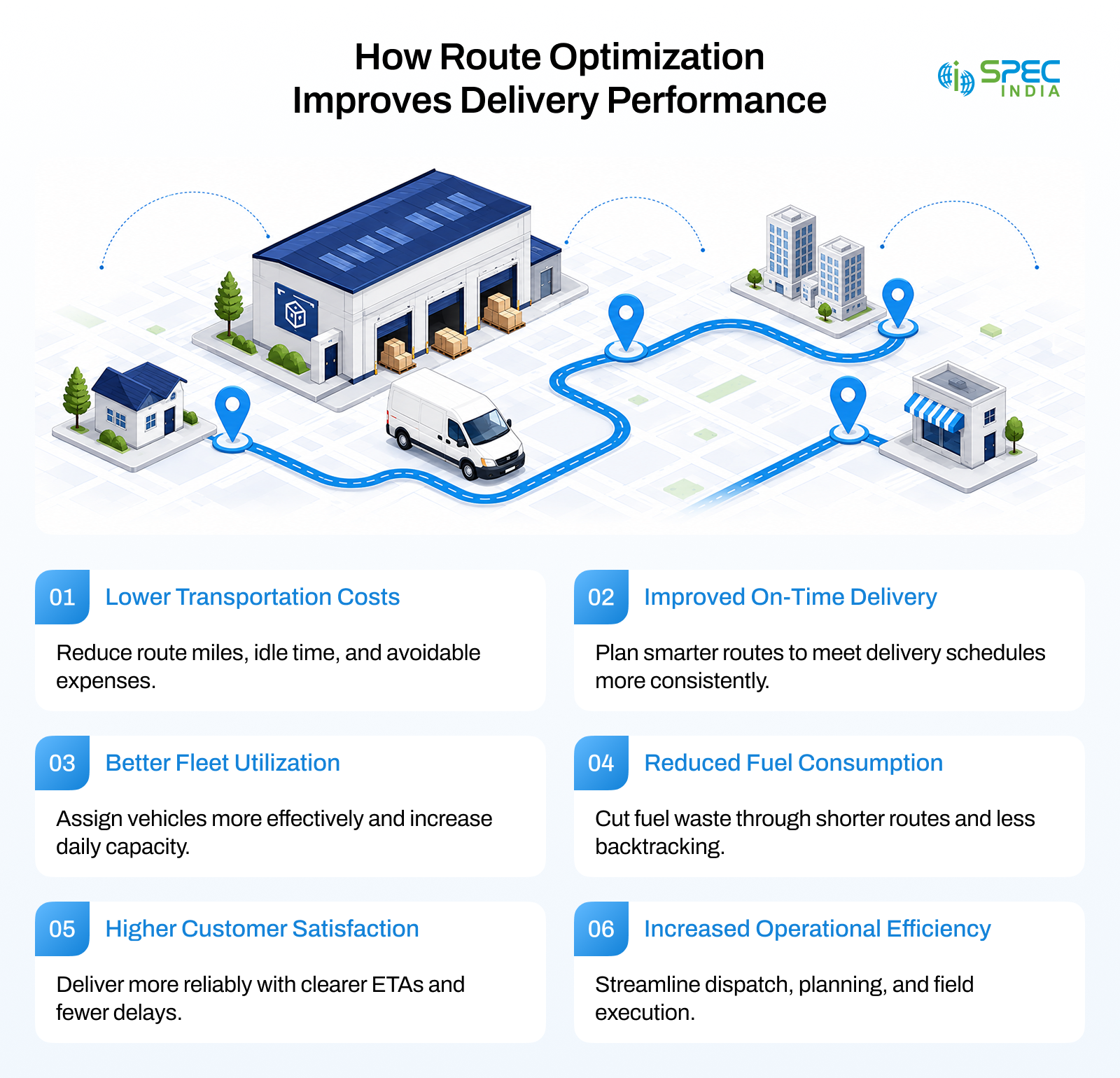
1. Lower Transportation Costs
Unnecessary mileage, idle time, and inefficient routes can increase transportation expenses.
Better route planning can help businesses:
- Reduce unnecessary mileage
- Minimize idle time
- Improve fuel efficiency
- Control transportation costs
Even small improvements across a large fleet can contribute to meaningful long-term savings.
2. Improved On-Time Delivery
Customers increasingly expect reliable delivery windows.
Optimized routes can help businesses respond to traffic conditions, reduce unnecessary delays, and improve delivery consistency.
This can support:
- More reliable delivery windows
- Fewer missed deliveries
- Better schedule adherence
- Improved customer communication
3. Better Fleet Utilization
A well-planned routing system can distribute work more effectively across available vehicles.
Better fleet utilization can:
- Reduce unnecessary vehicle downtime
- Balance workloads
- Improve driver productivity
- Increase operational capacity
This may allow businesses to handle additional delivery volumes without immediately expanding their fleet.
4. Reduced Fuel Consumption
Fuel efficiency is closely connected to route efficiency.
By reducing unnecessary travel, detours, and empty return trips, optimized routing can help reduce fuel consumption across daily operations.
5. Higher Customer Satisfaction
Reliable delivery is an important part of the customer experience.
Route optimization can support more accurate delivery windows, better tracking, and timely communication.
This can help businesses:
- Provide realistic delivery expectations
- Reduce missed deliveries
- Improve delivery visibility
- Build more reliable customer experiences
6. Increased Operational Efficiency
Connected route planning can reduce the amount of manual work required from dispatch and fleet teams.
Automated planning and real-time information can help:
- Simplify dispatch operations
- Improve coordination between teams
- Reduce manual route planning
- Support faster operational decisions
According to the American Transportation Research Institute, the cost of transporting goods by truck in 2025 was USD 2.336 per mile, the highest recorded level at the time of its report. For fleet operators, even incremental improvements in fuel use, idling, and unnecessary travel can contribute to long-term cost control.
Custom Route Optimization vs. Off-the-Shelf Software
Off-the-shelf routing software can suit businesses with straightforward requirements. However, growing logistics operations may require greater flexibility, integration, and control.
A custom approach lets you design routing capabilities around specific business processes, rather than forcing the business to adapt its operations to a predefined platform.
| Custom Solution | Off-the-Shelf Software |
|---|---|
| Tailored workflows | Standard workflows |
| Flexible integrations | Limited integration options |
| Scalable architecture | Platform-dependent scalability |
| Greater control over functionality | Vendor-defined functionality |
| Industry-specific capabilities | General-purpose features |
| Adaptable to unique business rules | Limited customization |
The difference becomes more important when routing needs to work alongside systems such as ERP, TMS, WMS, fleet management, or warehouse platforms.
For example, a logistics business with multiple depots, complex delivery rules, specialized vehicles, and existing enterprise systems may benefit from a solution designed around these specific requirements.
When Should Businesses Consider a Custom Route Optimization Solution?
Not every business needs a fully customized routing platform.
A standard solution may be sufficient when routing requirements are relatively simple, and existing workflows align well with the available features.
A custom solution may become more relevant when businesses have:
- Complex delivery rules
- Multiple depots or distribution centers
- Large or specialized fleets
- Multiple delivery zones
- Existing enterprise systems that require integration
- Industry-specific operational requirements
- High delivery volumes
- Unique reporting requirements
- Advanced automation or AI requirements
The decision should ultimately depend on operational complexity, integration requirements, scalability needs, and the level of control the business requires.
How to Choose the Right Logistics Route Optimization Solution
Selecting a route optimization solution is not simply a technology decision. The platform needs to support current operations while remaining capable of handling future business growth.
-
Business Requirements
Start by identifying the operational problems the system needs to solve.
Consider:
- Delivery volumes
- Service areas
- Fleet structure
- Delivery priorities
- Current routing challenges
- Required automation
Clearly defined requirements make it easier to evaluate whether a standard or custom solution is appropriate.
-
Fleet Size and Complexity
Routing requirements can vary significantly between small fleets and enterprise operations.
Consider whether the platform can:
- Support current and future fleet sizes
- Handle multiple depots
- Manage different vehicle types
- Accommodate varying vehicle capacities
- Support growing delivery volumes
-
Integration Requirements
A route optimization platform should work effectively with existing business systems.
Evaluate compatibility with:
- ERP systems
- TMS platforms
- WMS platforms
- Fleet management systems
- GPS and mapping services
- Analytics platforms
Strong integration can reduce duplicate data entry and create a more connected flow of information.
Regional adoption is also influencing the route optimization market. North America accounted for 38.05% of the market in 2025, while Asia-Pacific is projected to grow at a 14.82% CAGR, according to Mordor Intelligence.
-
Scalability
A solution should support business growth without requiring a complete technology replacement.
Consider whether it can:
- Handle increasing delivery volumes
- Support new locations
- Add vehicles and depots
- Maintain performance as data volumes grow
- Accommodate new operational requirements
-
AI Capabilities
AI can support route optimization by analyzing historical data and identifying patterns that may improve routing decisions.
When evaluating AI capabilities, consider whether the system can:
- Analyze historical route data
- Respond to changing traffic patterns
- Improve routing decisions over time
- Provide predictive insights
- Support automated decision-making
- Development and Implementation Expertise
For businesses considering a custom solution, technical expertise is only one part of the decision.
It is also important to evaluate:
- Understanding of logistics operations
- Experience with enterprise integrations
- Customization capabilities
- Scalability experience
- Implementation and support capabilities
- Experience with similar logistics workflows
The right development partner should understand the operational problem before recommending a technology approach.
A Practical Example of Custom Logistics Software Development
Route optimization is most effective when it works as part of a connected logistics ecosystem, not as an isolated tool.
For example, SPEC India developed a Fleet Management ERP for a US-based global shipment and tracking company. The platform supports more than 600 concurrent users and over 6,000 users across 35 offices in 23 countries.
The system integrates with Google Maps and Pentaho BI and supports several logistics functions, including:
- Ocean freight
- Air freight
- Trucking
- Warehouse processes
- Shipment management
- Business intelligence reporting
This example illustrates how route-related capabilities can work alongside shipment management, warehouse operations, integrations, and analytics within a broader enterprise platform.
For businesses evaluating logistics route optimization, this type of connected architecture can be useful when routing needs to interact with multiple operational systems.
Custom logistics software development provides the flexibility to connect routing, fleet data, shipment information, analytics, and existing enterprise systems to meet specific business requirements.
Final Thoughts
Logistics route optimization can help businesses address some of the most common challenges associated with growing delivery networks, including rising transportation costs, inefficient fleet utilization, delivery delays, and limited operational visibility.
Off-the-shelf platforms can work well for straightforward routing requirements. However, businesses with complex workflows, multiple systems, specialized fleets, or unique operational rules may need a more flexible approach.
A custom route optimization solution can be designed around those requirements and integrated with the broader logistics technology environment.
The key is not simply to choose the most advanced routing technology. It is to identify the operational challenges first and then select an approach that provides the right combination of efficiency, integration, scalability, and control.
For organizations exploring this approach, experience across logistics workflows, enterprise integrations, analytics, and custom software development can help turn route optimization into a broader operational capability.
SPEC INDIA is your trusted partner for AI-driven software solutions, with proven expertise in digital transformation and innovative technology services. We deliver secure, reliable, and high-quality IT solutions to clients worldwide. As an ISO/IEC 27001:2022 certified company, we follow the highest standards for data security and quality. Our team applies proven project management methods, flexible engagement models, and modern infrastructure to deliver outstanding results. With skilled professionals and years of experience, we turn ideas into impactful solutions that drive business growth.
Table of contents
- What is Logistics Route Optimization?
- Common Logistics Challenges Solved by Route Optimization
- Key Capabilities of a Custom Route Optimization Solution
- Business Benefits of Route Optimization
- Custom Route Optimization vs. Off-the-Shelf Software
- When Should Businesses Consider a Custom Route Optimization Solution?
- How to Choose the Right Logistics Route Optimization Solution
- A Practical Example of Custom Logistics Software Development
- Final Thoughts
Delivering Digital Outcomes To Accelerate Growth
Let’s TalkTable of contents
- What is Logistics Route Optimization?
- Common Logistics Challenges Solved by Route Optimization
- Key Capabilities of a Custom Route Optimization Solution
- Business Benefits of Route Optimization
- Custom Route Optimization vs. Off-the-Shelf Software
- When Should Businesses Consider a Custom Route Optimization Solution?
- How to Choose the Right Logistics Route Optimization Solution
- A Practical Example of Custom Logistics Software Development
- Final Thoughts
Delivering Digital Outcomes To Accelerate Growth
Let’s Talk
Let’s get in touch!
India
SPEC House, Parth Complex, Near Swastik Cross Roads, Navarangpura, Ahmedabad 380009, INDIA.
-
 +91-79-26404031, 32-33-34
 -
 [email protected]